
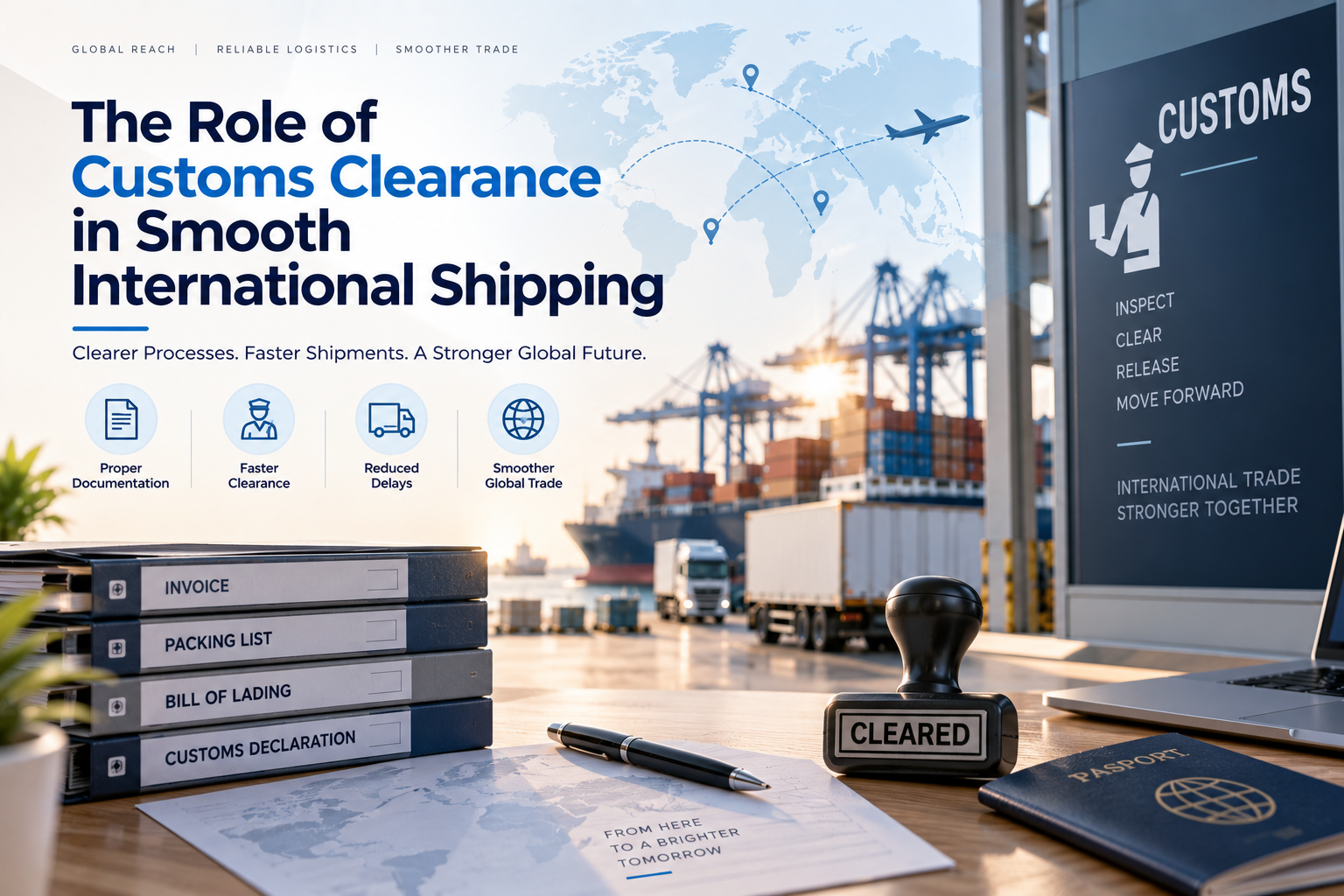
International shipping allows businesses to reach customers, suppliers and markets around the world.
But moving goods from one country to another involves more than transportation.
Shipments may need to pass through customs procedures before they can continue to their destination. Documentation, declarations, duties, product information and regulatory requirements can all play an important role in the process.
This is why customs clearance is a critical part of international logistics.
When customs processes are prepared and managed correctly, businesses can reduce avoidable delays, improve shipment predictability and keep international freight moving more efficiently.
What Is Customs Clearance?
Customs clearance is the process through which goods are declared and processed when they enter or leave a country.
The process generally involves providing relevant information about the shipment to customs authorities and meeting applicable import or export requirements.
Depending on the shipment, this may involve information such as:
- Description of the goods
- Quantity
- Value
- Country of origin
- Destination
- Classification information
- Commercial documentation
- Applicable duties and taxes
- Transport information
The exact requirements vary depending on the countries involved and the type of goods being shipped.
Why Is Customs Clearance Important?
A shipment can be transported perfectly and still experience delays if its customs requirements have not been properly addressed.
Customs clearance helps ensure that goods can move through international borders in accordance with applicable requirements.
Effective customs preparation can help businesses:
- Reduce avoidable delays
- Improve shipment planning
- Maintain accurate documentation
- Understand potential customs costs
- Coordinate international freight more effectively
- Improve supply chain visibility
For businesses regularly importing or exporting goods, customs clearance should be considered an essential part of logistics planning.
1. Customs Clearance Helps Prevent Shipment Delays
One of the biggest concerns with international shipping is delay.
A shipment may be held when required information is incomplete, inaccurate or missing.
Problems can include:
- Incorrect documentation
- Incomplete shipment information
- Incorrect classification
- Missing permits where applicable
- Inconsistent commercial information
Preparing the required information before shipment can help reduce the risk of unnecessary interruptions.
Good customs preparation is therefore an important part of keeping international freight moving.
2. Accurate Documentation Is Essential
Documentation plays a central role in international shipping.
Depending on the shipment, documents may include commercial invoices, packing information, transport documents and other customs-related paperwork.
Errors in documentation can create unnecessary questions or delays.
Businesses should ensure that shipment information is accurate and consistent across relevant documents.
This includes details such as:
- Product descriptions
- Quantities
- Values
- Sender information
- Receiver information
- Country of origin
Accurate documentation helps create a smoother customs process.
3. Customs Classification Matters
Goods are generally classified using internationally recognised tariff classification systems.
The classification assigned to a product can affect customs treatment, including applicable duties or other requirements.
Incorrect classification can create problems for businesses.
This is why companies involved in international trade should take classification seriously and ensure that the appropriate information is provided.
Where necessary, businesses can seek advice from qualified customs professionals.
4. Customs Duties and Taxes Need to Be Considered
International shipments may be subject to duties, taxes or other charges depending on the countries and goods involved.
These costs can affect the total cost of importing or exporting products.
Businesses should understand potential customs-related costs before shipping whenever possible.
Planning ahead can help companies:
- Estimate landed costs
- Prepare budgets
- Price products appropriately
- Avoid unexpected expenses
- Improve financial planning
Customs costs should therefore be considered as part of the overall logistics strategy.
5. Customs Clearance Supports Cross-Border Logistics
International freight often involves multiple stages.
For example:
Supplier → Export Process → International Transportation → Import Customs → Warehouse → Customer
Customs clearance connects the international transportation stage with the next part of the supply chain.
If customs processing is delayed, the entire logistics chain can be affected.
Effective customs coordination can therefore contribute to a more predictable international supply chain.
6. Customs Requirements Depend on the Shipment
There is no single customs process that applies identically to every shipment.
Requirements can depend on:
- Origin country
- Destination country
- Type of product
- Shipment value
- Intended use
- Import or export status
- Applicable trade rules
For this reason, businesses should understand the specific requirements associated with their shipments rather than assuming that every international delivery follows the same process.
7. Good Customs Preparation Improves Supply Chain Predictability
Businesses need predictable logistics operations.
A shipment delayed unexpectedly at a border can affect inventory levels, production schedules, warehouse planning and customer deliveries.
Proper customs preparation can reduce the risk of avoidable issues.
While customs authorities ultimately determine whether goods can be cleared, businesses can improve their readiness by ensuring that required information is complete and accurate.
Better preparation contributes to greater supply chain predictability.
8. Customs Clearance and International Freight Work Together
Customs clearance should not be treated as a separate activity from transportation.
It is part of the international freight process.
Logistics teams need to coordinate:
- Shipment scheduling
- Transportation
- Documentation
- Customs requirements
- Delivery planning
- Warehouse operations
When these activities are properly coordinated, businesses can create a smoother end-to-end logistics process.
9. Technology Is Improving Customs Processes
Technology is changing the way international logistics information is managed.
Digital systems can help businesses organise documentation, share shipment information and improve communication between supply-chain participants.
Digital freight information can also reduce reliance on paper-based processes.
For businesses managing international shipments, better digital connectivity can improve visibility and reduce administrative complexity.
Technology does not eliminate the need for accurate customs information, but it can make managing that information more efficient.
10. Customs Clearance Can Affect Customer Experience
Customers may not see the customs process, but they experience its consequences.
If an international shipment is delayed at the border, the customer may receive the order later than expected.
Reliable customs preparation can therefore contribute to better delivery performance.
For businesses selling internationally, this can be particularly important.
A smooth international delivery experience can help build customer confidence and strengthen long-term relationships.
11. Customs Compliance Protects Businesses
Compliance is an important part of international trade.
Businesses are responsible for providing accurate information and meeting applicable customs and trade requirements.
Failure to comply can potentially result in:
- Delays
- Additional costs
- Administrative problems
- Shipment holds
- Penalties or other enforcement action
Businesses should therefore take customs compliance seriously and obtain professional advice when their shipments involve complex requirements.
12. Customs Clearance Is Important for European Trade
European businesses frequently operate across multiple national markets.
Although the European Union has a highly integrated internal market, customs procedures still apply in relevant trade involving goods entering or leaving the EU customs territory.
Businesses involved in international trade therefore need to understand when customs procedures apply to their shipments.
For companies operating between European and non-EU markets, effective customs planning can be particularly important.
Common Customs Clearance Challenges
Businesses involved in international shipping may encounter several common challenges.
Incomplete Documentation
Missing information can slow the clearance process.
Incorrect Product Information
Inaccurate descriptions or classification information can create questions or delays.
Unexpected Customs Costs
Businesses may not always account for duties, taxes or other import-related costs.
Changing Requirements
International trade requirements can change, making it important to use current information.
Poor Communication
A lack of coordination between shippers, carriers, customs representatives and recipients can create unnecessary problems.
How Businesses Can Prepare for Customs Clearance
Good preparation starts before the shipment leaves the warehouse.
1. Prepare Accurate Documentation
Make sure relevant shipment information is complete and consistent.
2. Understand the Product
Maintain accurate information about what is being shipped, including its description and relevant classification details.
3. Understand the Destination Requirements
Review applicable import or export requirements for the countries involved.
4. Plan for Duties and Taxes
Consider potential customs-related costs as part of the overall shipment budget.
5. Communicate With Your Logistics Partner
Make sure the parties involved understand who is responsible for customs-related tasks.
6. Keep Records Organised
Maintain relevant documentation so that information can be accessed when required.
Questions to Ask Your Logistics Provider
If your business regularly ships internationally, ask your logistics provider:
- Do you support customs clearance coordination?
- Which international routes do you handle?
- How are customs documents managed?
- Who is responsible for submitting relevant information?
- How are customs delays communicated?
- Can you help identify documentation requirements?
- How is shipment information shared with customers?
Clear answers can help businesses understand what support their logistics partner provides.
Why Work With an Experienced Logistics Partner?
International shipping can involve many moving parts.
Businesses may need to coordinate freight transportation, documentation, customs processes, warehousing and final delivery.
An experienced logistics provider can help coordinate these activities and provide greater operational visibility.
The right partner can help businesses manage:
- International freight
- Cross-border transportation
- Shipment coordination
- Customs-related processes
- Documentation
- Delivery planning
- Supply chain communication
This can allow businesses to focus on their core operations while experienced logistics professionals coordinate the movement of goods.
Customs and International Logistics With Immensity Global
Smooth international shipping requires careful coordination at every stage.
Transportation is important, but so are documentation, customs processes, communication and delivery planning.
At Immensity Global, we understand the importance of dependable international logistics for businesses operating across borders.
Our focus is on helping businesses coordinate freight transportation and logistics requirements efficiently while providing professional support throughout the shipment journey.
Whether you are moving goods across Europe or shipping internationally, effective logistics planning can help reduce complexity and create a more reliable supply chain.
Better preparation. Smoother logistics. More reliable international shipping.
If your business needs international freight and logistics support, contact Immensity Global to discuss your requirements.
Frequently Asked Questions
What is customs clearance?
Customs clearance is the process of declaring and processing goods when they enter or leave a country and meeting applicable customs requirements.
Why is customs clearance important?
It helps ensure that international shipments meet applicable requirements and can move through borders without avoidable delays.
What documents are needed for customs clearance?
Requirements vary by shipment and country, but may include commercial invoices, packing information, transport documents and other customs-related documentation.
Can customs clearance delay an international shipment?
Yes. Incomplete or inaccurate information can contribute to delays, although customs authorities determine whether goods can be cleared.
Who is responsible for customs clearance?
Responsibility depends on the shipment, trade arrangement and parties involved. Businesses should clearly establish responsibilities with their logistics or customs provider.
Does every international shipment have the same customs requirements?
No. Requirements can vary depending on the origin, destination, goods, value and applicable regulations.
How can businesses reduce customs-related delays?
Businesses can improve preparation by providing accurate information, maintaining complete documentation, understanding applicable requirements and working with experienced logistics professionals.
Final Thoughts
Customs clearance is an essential part of international shipping.
When documentation, product information and customs requirements are properly prepared, businesses can reduce avoidable complications and create a more predictable freight process.
For companies operating internationally, customs should not be treated as an afterthought.
It should be considered from the beginning of the logistics planning process.
Smooth international shipping starts with proper preparation.
With the right logistics partner, businesses can coordinate transportation, documentation and cross-border requirements more effectively — helping goods move efficiently from origin to destination.
Plan carefully. Clear efficiently. Move confidently.