
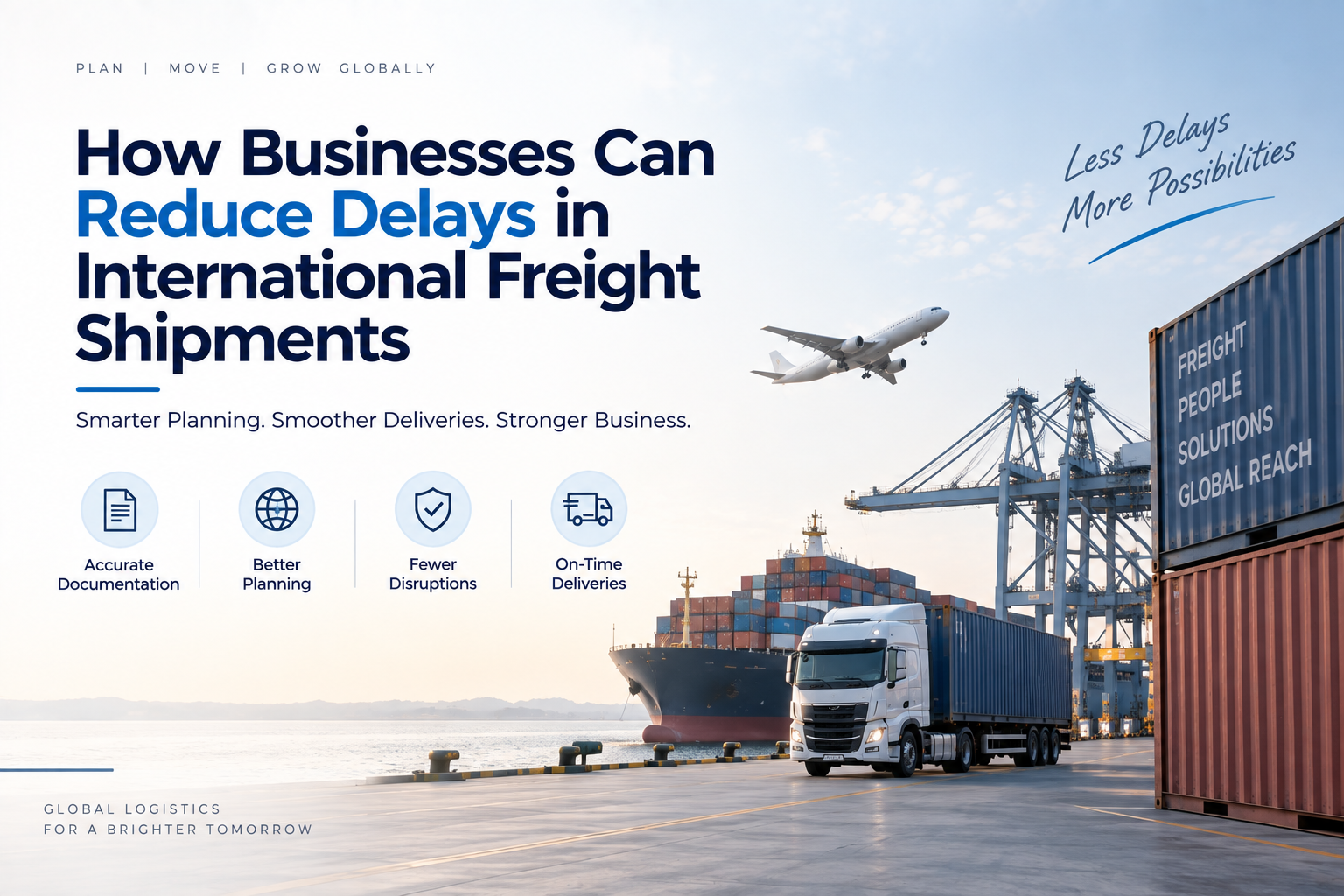
International freight allows businesses to connect with suppliers, customers and markets around the world.
But moving goods internationally can involve many different stages, and delays can occur when even one part of the process is not properly coordinated.
Transportation schedules, documentation, customs requirements, weather, traffic, capacity and communication can all influence when a shipment reaches its destination.
While not every delay can be prevented, businesses can take practical steps to reduce delays in international freight shipments and make their logistics operations more predictable.
The key is preparation.
From accurate documentation and careful route planning to shipment tracking and reliable communication, a well-managed freight process can help businesses identify potential problems earlier and respond more effectively.
What Causes International Freight Delays?
Before businesses can reduce delays, it helps to understand what can cause them.
Common factors include:
- Incomplete documentation
- Incorrect shipment information
- Customs processing
- Transportation disruptions
- Port or terminal congestion
- Traffic and road conditions
- Weather
- Limited transportation capacity
- Poor communication
- Unexpected changes in delivery requirements
Some of these factors are outside a business’s control.
However, good logistics planning can reduce the risk of avoidable delays and improve the ability to respond when unexpected problems occur.
1. Prepare Accurate Shipping Documentation
Documentation is one of the most important parts of international freight.
Incomplete or inconsistent information can create questions and potentially delay a shipment.
Depending on the shipment, businesses may need documentation such as:
- Commercial invoices
- Packing lists
- Transport documents
- Certificates
- Customs information
- Product details
Businesses should review relevant documents before goods are dispatched.
The information should be accurate, complete and consistent across applicable documents.
Good documentation can help create a smoother shipping and customs process.
2. Understand Customs Requirements
Customs procedures can be an important part of international shipping.
Requirements vary depending on factors such as:
- Origin
- Destination
- Type of goods
- Shipment value
- Applicable trade rules
- Import or export requirements
Businesses should understand the relevant customs requirements before shipping.
Preparing information in advance can reduce the risk of avoidable questions or documentation problems.
For more complex shipments, businesses may benefit from working with experienced customs or logistics professionals.
3. Plan International Freight Routes Carefully
Choosing a transportation route is about more than selecting the shortest distance.
Businesses should consider:
- Transit time
- Border crossings
- Transportation availability
- Road conditions
- Port congestion
- Delivery requirements
- Alternative routes
A well-planned route can help reduce unnecessary delays and provide options if conditions change.
For cross-border freight, route planning is particularly important because shipments may pass through multiple countries and transportation networks.
4. Choose the Right Transportation Method
Different shipments may require different transportation solutions.
Depending on the goods, destination and delivery requirements, businesses may consider:
- Road freight
- Rail freight
- Air freight
- Sea freight
- Multimodal transportation
The fastest transportation method is not always the most appropriate.
Businesses should balance:
Speed + Cost + Reliability + Shipment Requirements
Choosing the right transportation solution can improve overall freight performance.
5. Work With a Reliable Logistics Partner
A professional logistics partner can play an important role in reducing freight delays.
Experienced logistics providers can help coordinate:
- Transportation
- Route planning
- Shipment scheduling
- Documentation
- Cross-border movements
- Delivery communication
- Shipment tracking
The right logistics partner should also have processes for responding when unexpected problems occur.
Reliable transportation is important, but reliable communication and problem-solving are equally valuable.
6. Use Real-Time Shipment Tracking
Visibility can make a major difference when managing international freight.
Real-time shipment tracking allows businesses to monitor transportation progress and identify potential delays.
Tracking information can help businesses understand:
- Where a shipment is
- Whether it is on schedule
- When it is expected to arrive
- Whether the route has changed
- Whether action may be required
The earlier a potential problem is identified, the more time businesses may have to respond.
7. Communicate With All Supply Chain Partners
International freight often involves several parties.
A shipment may involve:
Supplier → Carrier → Customs → Warehouse → Distributor → Customer
If communication breaks down between any of these parties, delays can become more likely.
Businesses should establish clear communication channels and make sure relevant parties have the information they need.
This includes:
- Shipment schedules
- Delivery requirements
- Documentation
- Contact information
- Changes to transportation plans
Clear communication can prevent small misunderstandings from becoming larger logistical problems.
8. Allow Enough Time for International Shipments
One common mistake businesses make is planning international shipments with unrealistic delivery expectations.
International transportation can involve factors that are difficult to predict.
Businesses should build reasonable time buffers into delivery schedules where appropriate.
This can provide additional flexibility if unexpected transportation or border-related delays occur.
Accurate planning is better than promising a delivery time that is difficult to achieve.
9. Check Shipment Information Before Dispatch
Small errors can create large logistical problems.
Before a shipment leaves the warehouse, businesses should verify key information.
This may include:
- Delivery address
- Product description
- Quantity
- Shipment weight
- Dimensions
- Consignee information
- Documentation
- Delivery instructions
A simple pre-dispatch checklist can help identify problems before the shipment enters the transportation network.
10. Package Goods Correctly
Packaging is another important consideration.
Poor packaging can result in damaged goods, additional handling or delays during transportation.
Businesses should ensure that products are packaged appropriately for the selected transportation method and journey.
Good packaging should help protect goods from:
- Movement
- Impact
- Moisture
- Handling
- Stacking
Proper preparation can reduce the likelihood of shipment-related problems.
11. Monitor Weather and Transportation Conditions
International freight can be affected by external conditions.
Weather, road conditions, traffic, port congestion and other events can influence transportation schedules.
Businesses cannot control these factors, but they can monitor them and prepare alternative options where possible.
For important shipments, contingency planning can help businesses respond more effectively when conditions change.
12. Have Alternative Transportation Options
A strong logistics strategy should include contingency planning.
If a particular route becomes unavailable or transportation capacity becomes limited, businesses may need alternatives.
Possible options can include:
- Alternative routes
- Different carriers
- Different transportation modes
- Adjusted delivery schedules
- Alternative distribution points
Having backup options can make a supply chain more resilient.
13. Coordinate Warehousing and Transportation
International freight does not operate separately from warehousing.
A shipment arriving at a warehouse requires space, labour and receiving capacity.
If transportation and warehouse teams are not coordinated, goods may experience unnecessary waiting time.
Businesses should coordinate:
- Expected arrival times
- Warehouse capacity
- Unloading schedules
- Inventory requirements
- Delivery planning
Better coordination can help goods move smoothly from one stage to the next.
14. Avoid Last-Minute Planning
Last-minute logistics decisions can increase the risk of problems.
Booking transportation too late may result in limited capacity or less flexibility.
Preparing shipments and transportation arrangements in advance gives businesses more options.
This is particularly important during periods of high demand.
Planning ahead can help businesses secure appropriate transportation capacity and create more predictable delivery schedules.
15. Measure Freight Performance
Businesses cannot improve what they do not measure.
Tracking logistics performance can help identify recurring causes of delays.
Useful metrics may include:
- On-time delivery rate
- Average transit time
- Customs delays
- Carrier performance
- Failed deliveries
- Route performance
- Shipment damage
- Transportation costs
Analysing these metrics can help businesses identify areas where improvements are needed.
16. Build Strong Relationships With Logistics Providers
International freight is easier to manage when logistics providers understand the business.
Over time, a strong logistics relationship can help providers understand:
- Regular shipment volumes
- Preferred routes
- Delivery requirements
- Seasonal demand
- Customer expectations
This knowledge can improve coordination and make it easier to respond when requirements change.
17. Use Technology to Improve Freight Management
Modern logistics technology can help businesses manage international shipments more efficiently.
Digital systems can support:
- Shipment tracking
- Route planning
- Automated updates
- Digital documentation
- Transportation scheduling
- Performance reporting
Technology can improve visibility and reduce the amount of manual work required to manage freight.
The result can be a more connected and responsive logistics operation.
18. Create a Freight Delay Response Plan
Even with excellent planning, delays can still happen.
Businesses should have a clear process for responding.
A delay response plan can identify:
- Who should be contacted
- Which customers need updates
- What alternative transportation options exist
- How delivery schedules should be adjusted
- Who is responsible for making decisions
Having a plan in place allows teams to respond quickly rather than trying to determine what to do during an emergency.
Common Mistakes That Cause International Freight Delays
Businesses should avoid several common mistakes.
Incomplete Documentation
Missing or incorrect information can create avoidable problems.
Poor Planning
Last-minute transportation arrangements can reduce available options.
Unrealistic Delivery Promises
International shipments can require more flexibility than domestic deliveries.
Lack of Shipment Visibility
Without tracking, businesses may not know about problems until it is too late.
Poor Communication
Information gaps between suppliers, carriers and customers can create unnecessary delays.
No Contingency Plan
Businesses without alternative options may struggle when transportation conditions change.
A Simple International Freight Checklist
Before shipping internationally, businesses can review the following:
✓ Confirm shipment details
✓ Check product information
✓ Prepare relevant documentation
✓ Review customs requirements
✓ Confirm transportation capacity
✓ Verify delivery address
✓ Check packaging
✓ Confirm delivery schedule
✓ Set up shipment tracking
✓ Establish communication contacts
✓ Prepare contingency options
This simple process can help identify potential issues before the shipment begins.
How a Logistics Partner Can Help Reduce Delays
Managing international freight involves coordinating many different activities.
A professional logistics partner can help businesses bring these activities together.
Depending on the service, a logistics provider may support:
- Freight transportation
- Cross-border logistics
- Route planning
- Shipment coordination
- Tracking and visibility
- Documentation support
- Delivery scheduling
- Supply chain communication
This can reduce the operational burden on internal teams while providing access to professional logistics expertise.
International Freight Support With Immensity Global
International shipping does not have to be unnecessarily complicated.
Businesses can reduce the risk of freight delays by planning shipments carefully, preparing accurate documentation, understanding customs requirements, monitoring transportation and maintaining clear communication.
At Immensity Global, we understand that reliable international freight depends on more than transportation alone.
Effective logistics requires planning, coordination, visibility and the ability to respond when circumstances change.
Our goal is to help businesses move goods efficiently while providing dependable logistics support for their changing transportation requirements.
Whether you are shipping across Europe or managing international freight, the right logistics strategy can help create a more predictable and efficient supply chain.
Better planning. Fewer delays. More reliable freight transportation.
If your business needs dependable international logistics and freight transportation support, contact Immensity Global to discuss your requirements.
Frequently Asked Questions
What causes international freight delays?
Delays can result from incomplete documentation, customs processes, transportation disruptions, congestion, weather, limited capacity and communication problems.
How can businesses reduce international shipping delays?
Businesses can improve preparation by using accurate documentation, planning routes, understanding customs requirements, tracking shipments and working with reliable logistics providers.
Can shipment tracking prevent delays?
Tracking cannot prevent every delay, but it can help businesses identify potential problems earlier and respond more quickly.
Why is customs preparation important?
Accurate customs information and documentation can help reduce avoidable questions and processing problems during international shipments.
Is air freight always faster than road or sea freight?
Air freight is generally faster for many long-distance shipments, but the most suitable transportation method depends on the shipment, destination, cost and delivery requirements.
Should businesses have backup transportation plans?
Yes. Alternative routes, carriers or transportation methods can provide additional flexibility when unexpected disruptions occur.
How can a logistics company help with international freight?
A logistics company can help coordinate transportation, routes, shipment tracking, documentation, cross-border movements and delivery planning.
Final Thoughts
International freight delays can affect inventory, customer satisfaction, production schedules and business revenue.
While some delays are unavoidable, many risks can be reduced through better planning and coordination.
Accurate documentation, customs preparation, reliable transportation, real-time tracking, clear communication and contingency planning can all contribute to smoother international freight operations.
The goal is not simply to move goods from one country to another.
It is to create a predictable, visible and resilient logistics process from origin to destination.
At Immensity Global, we believe that better logistics starts with better planning.
Plan ahead. Track shipments. Communicate clearly. Keep freight moving.