
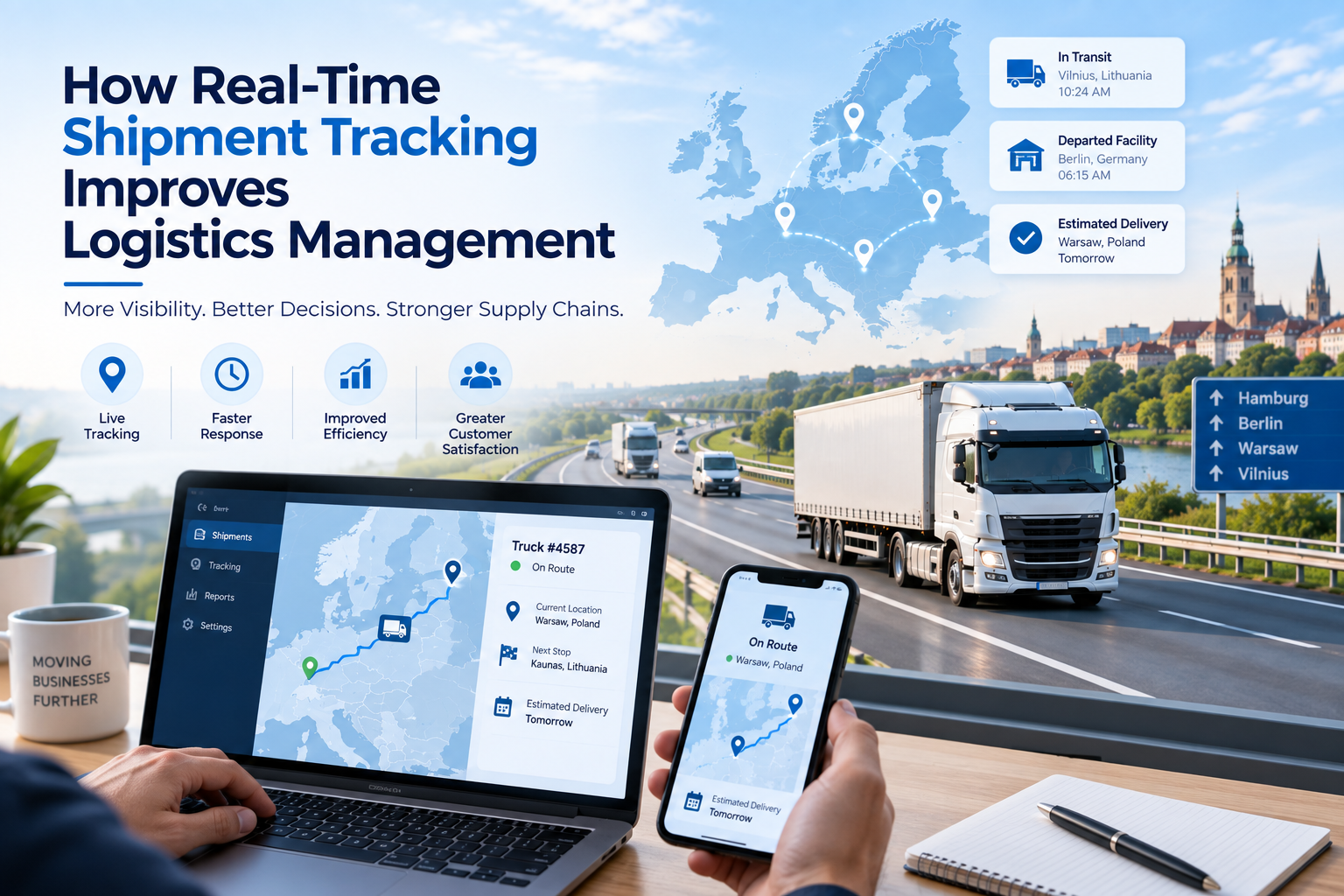
Knowing where a shipment is should not be a guessing game.
For businesses that depend on reliable freight transportation, having accurate information about shipments can make a significant difference. When logistics teams know where goods are, when they are expected to arrive and whether a problem has occurred, they can make faster and better decisions.
This is where real-time shipment tracking becomes valuable.
Modern tracking technology gives businesses greater visibility throughout the transportation process. Instead of waiting for manual updates, companies can monitor shipment progress and respond to changes more effectively.
For businesses managing domestic or international freight, real-time tracking can improve logistics management, customer communication and overall supply chain efficiency.
What Is Real-Time Shipment Tracking?
Real-time shipment tracking uses digital technologies to provide information about the location and status of goods while they are being transported.
Depending on the logistics system, tracking information may include:
- Current shipment location
- Delivery status
- Estimated arrival time
- Route information
- Transportation progress
- Potential delays
- Delivery confirmation
This information can be accessed by logistics teams and, where appropriate, shared with customers or other supply-chain partners.
The result is greater visibility from dispatch to final delivery.
Why Shipment Visibility Matters
Without adequate visibility, logistics teams may have limited information about what is happening during transportation.
A shipment could be delayed by traffic, weather, operational issues or other unexpected circumstances.
Without timely information, businesses may only discover the problem after the expected delivery time has passed.
Real-time tracking changes this process.
Instead of reacting after a problem occurs, logistics teams can identify changes earlier and take appropriate action.
This creates a more proactive approach to logistics management.
1. Real-Time Tracking Improves Logistics Visibility
The biggest advantage of shipment tracking is visibility.
Businesses can monitor shipments while they are moving through the transportation network.
This helps answer important questions:
Where is the shipment?
Is it on schedule?
When is it expected to arrive?
Has something changed?
Having access to this information allows logistics teams to maintain greater control over transportation operations.
For companies managing multiple shipments across different destinations, this visibility can be especially valuable.
2. Faster Response to Delays
Transportation delays can happen for many reasons.
Traffic congestion, road closures, weather conditions, vehicle issues or unexpected operational problems can affect delivery schedules.
Real-time shipment tracking can help logistics teams identify potential delays sooner.
This gives businesses more time to respond.
Depending on the situation, they may be able to:
- Contact the carrier
- Update the customer
- Adjust delivery arrangements
- Change transportation plans
- Reorganise warehouse activities
- Prepare for a revised arrival time
The earlier a business knows about a potential problem, the more options it may have.
3. Better Customer Communication
Customers want visibility.
When businesses provide accurate shipment updates, customers do not have to repeatedly contact customer service asking where their order is.
Tracking information can provide greater transparency throughout the delivery process.
Businesses can communicate:
- Shipment dispatch
- Current progress
- Estimated delivery
- Delays
- Delivery completion
Better communication can improve customer confidence and create a more professional delivery experience.
4. Improved Delivery Planning
Real-time shipment information can help businesses coordinate activities around expected deliveries.
For example, a warehouse may need to prepare space for incoming goods or a business may need employees available to receive a shipment.
Knowing when freight is expected to arrive makes planning easier.
Instead of working with uncertain delivery information, teams can make decisions using more current shipment data.
This can improve coordination between transportation, warehousing and other operational teams.
5. Better Supply Chain Coordination
Transportation is only one part of the supply chain.
Shipments connect suppliers, manufacturers, warehouses, distribution centres and customers.
A delay at one stage can affect everything that follows.
Real-time shipment tracking gives businesses greater awareness of transportation activity, helping different teams coordinate their operations.
For example:
Supplier → Freight Transport → Warehouse → Distribution → Customer
When each stage has better information, the entire process can become more coordinated.
6. Reducing Manual Communication
Traditional logistics operations can involve a large amount of manual communication.
Employees may need to contact drivers or carriers for shipment updates and then pass that information to other teams.
This can consume valuable time.
Digital tracking systems can reduce the need for repeated manual status requests.
Instead of asking where a shipment is, logistics teams can access available tracking information directly.
This allows employees to spend more time managing exceptions and solving problems rather than collecting basic status updates.
7. Better Logistics Decision-Making
Good logistics management depends on good information.
Businesses need accurate information to decide:
- Which shipments require attention
- Whether delivery schedules need to change
- How warehouse resources should be allocated
- Whether customers need to be contacted
- How transportation performance can be improved
Real-time tracking provides another source of operational data.
Over time, businesses can use historical shipment information to identify patterns and improve their logistics processes.
8. Improved Freight Management
For businesses managing multiple freight movements, shipment tracking can become an important part of freight management.
Instead of viewing individual shipments in isolation, logistics teams can develop a broader picture of transportation activity.
They can identify:
- Active shipments
- Delayed shipments
- Completed deliveries
- Route performance
- Recurring transportation issues
This can help logistics managers prioritise their work and focus attention where it is most needed.
9. Supports International and Cross-Border Logistics
Shipment visibility becomes particularly important when goods travel across borders.
International freight may involve longer transportation distances and multiple stages.
Businesses need to coordinate transportation schedules while keeping customers and internal teams informed.
Real-time tracking can provide greater visibility throughout the journey.
For companies operating across Europe, this can support better coordination between different locations, carriers and distribution points.
Cross-border logistics requires strong communication, and shipment visibility can help create a more connected transportation process.
10. Helps Improve Delivery Performance
Tracking technology can also help businesses measure logistics performance.
Companies can analyse information such as:
- Average delivery times
- Delays
- Route performance
- On-time delivery rates
- Transportation patterns
- Recurring issues
This information can help businesses identify areas for improvement.
For example, if certain routes consistently experience delays, logistics teams can investigate the cause and consider alternative transportation solutions.
Tracking therefore provides value beyond knowing where a shipment is.
It can also support long-term logistics optimisation.
11. Supports Better Inventory Planning
Transportation and inventory management are closely connected.
If a business does not know when incoming goods will arrive, inventory planning becomes more difficult.
Real-time shipment visibility can provide better information about goods in transit.
This can help businesses make more informed decisions about:
- Inventory levels
- Warehouse capacity
- Production planning
- Order fulfilment
- Incoming stock
Better coordination between transportation and inventory teams can contribute to a more efficient supply chain.
12. Creates Greater Accountability
Shipment tracking can create a clearer record of transportation activity.
Businesses can use tracking information to understand when shipments were dispatched, how they progressed and when they reached their destination.
This can make it easier to investigate delivery issues and understand where problems occurred.
Greater transparency can also support stronger relationships between businesses and logistics providers.
Technology Behind Real-Time Shipment Tracking
Modern shipment tracking can use several technologies and data sources.
These may include:
GPS Tracking
GPS technology can provide information about the location of vehicles and shipments.
Mobile Connectivity
Connected devices can transmit transportation information while vehicles are moving.
Transportation Management Systems
Transportation management platforms can bring shipment, carrier and route information together.
Cloud-Based Platforms
Cloud systems can allow authorised users to access logistics information from different locations.
Data Analytics
Historical tracking data can help businesses analyse transportation performance and identify opportunities for improvement.
Together, these technologies can create a more connected logistics environment.
How Real-Time Tracking Benefits Businesses
The advantages of shipment tracking extend beyond the logistics department.
For Operations Teams
Better visibility helps teams coordinate transportation and respond to issues.
For Customer Service Teams
Accurate shipment information makes it easier to answer customer questions.
For Management
Logistics data can support better operational and strategic decisions.
For Customers
Tracking provides greater transparency and confidence in the delivery process.
This makes real-time shipment tracking valuable across the organisation.
How Businesses Can Get More From Shipment Tracking
Simply having tracking technology is not enough.
Businesses should also create processes around the information they receive.
Define Important Tracking Events
Identify which shipment events require attention, such as delays or missed delivery windows.
Create Clear Responsibilities
Decide who monitors shipments and who is responsible for responding to problems.
Communicate With Customers
Use tracking information to provide relevant and timely updates.
Analyse Historical Data
Review past transportation performance to identify recurring issues.
Integrate Tracking With Logistics Operations
Where possible, connect shipment visibility with transportation, warehouse and customer-service processes.
This turns tracking from a simple status tool into a broader logistics-management resource.
The Future of Shipment Tracking
Shipment visibility will continue to develop as logistics technology becomes more advanced.
Businesses are increasingly moving toward connected logistics systems that combine tracking, data analysis, automation and transportation management.
Future logistics operations are likely to place even greater emphasis on:
- Real-time visibility
- Predictive analytics
- Automated alerts
- Route optimisation
- Connected fleets
- Digital freight management
- Data-driven decision-making
The objective is to make transportation more proactive rather than reactive.
Instead of discovering problems after they occur, businesses can use technology to identify potential issues earlier and respond more effectively.
Choosing a Logistics Partner With Strong Visibility
When selecting a logistics provider, businesses should consider more than transportation capacity.
Shipment visibility should also be part of the evaluation.
Ask potential logistics partners:
- Do you provide shipment tracking?
- How frequently is tracking information updated?
- Can customers access shipment information?
- How are delays communicated?
- Can tracking information support reporting?
- What happens when a shipment is delayed?
A logistics provider that combines reliable transportation with strong communication and shipment visibility can provide greater value to growing businesses.
Real-Time Logistics Support With Immensity Global
Modern logistics requires more than moving goods from one location to another.
Businesses need visibility, communication and reliable transportation throughout the journey.
Real-time shipment tracking can help companies understand where their freight is, respond faster to delays, improve customer communication and make better logistics decisions.
At Immensity Global, we understand the importance of dependable transportation and efficient logistics management for modern businesses.
By combining reliable freight transportation with professional coordination and modern logistics practices, businesses can create stronger and more transparent supply chains.
Whether you require regular freight transportation, cross-border logistics or scalable transportation support, the right logistics partner can help you maintain better control over your shipments.
More visibility. Faster decisions. Better logistics.
If your business is looking for reliable freight transportation and logistics support, contact Immensity Global to discuss your requirements.
Frequently Asked Questions
What is real-time shipment tracking?
Real-time shipment tracking allows businesses to monitor the location and progress of goods while they are being transported.
Why is real-time shipment tracking important?
It provides greater shipment visibility, helps identify delays sooner, improves customer communication and supports better logistics decision-making.
How does shipment tracking improve customer service?
Tracking information allows businesses to provide customers with more accurate updates about shipment progress and expected delivery times.
Can shipment tracking help reduce delivery delays?
Tracking itself does not eliminate delays, but it can help businesses identify potential problems earlier and respond more quickly.
Is shipment tracking useful for cross-border freight?
Yes. Tracking can provide valuable visibility when shipments travel across multiple countries, routes and transportation stages.
What technology is used for shipment tracking?
GPS, mobile connectivity, transportation management systems, cloud platforms and data analytics can all contribute to modern shipment tracking.
Can small businesses benefit from real-time tracking?
Yes. Shipment visibility can help businesses of different sizes improve customer communication, transportation coordination and operational planning.
Final Thoughts
Real-time shipment tracking is changing the way businesses manage transportation.
Instead of relying on delayed updates or manual communication, companies can gain greater visibility into their freight and make faster decisions.
From improving customer communication to supporting supply chain coordination and freight management, tracking technology can provide value throughout the logistics process.
For modern businesses, knowing where your shipment is is only the beginning.
The real advantage comes from using that information to make better decisions, respond faster and build a more reliable supply chain.