
Freight transportation has always been an essential part of global commerce. Businesses depend on reliable transportation networks to move raw materials, components and finished products between suppliers, warehouses, distribution centres and customers.
But the way freight is managed is changing.
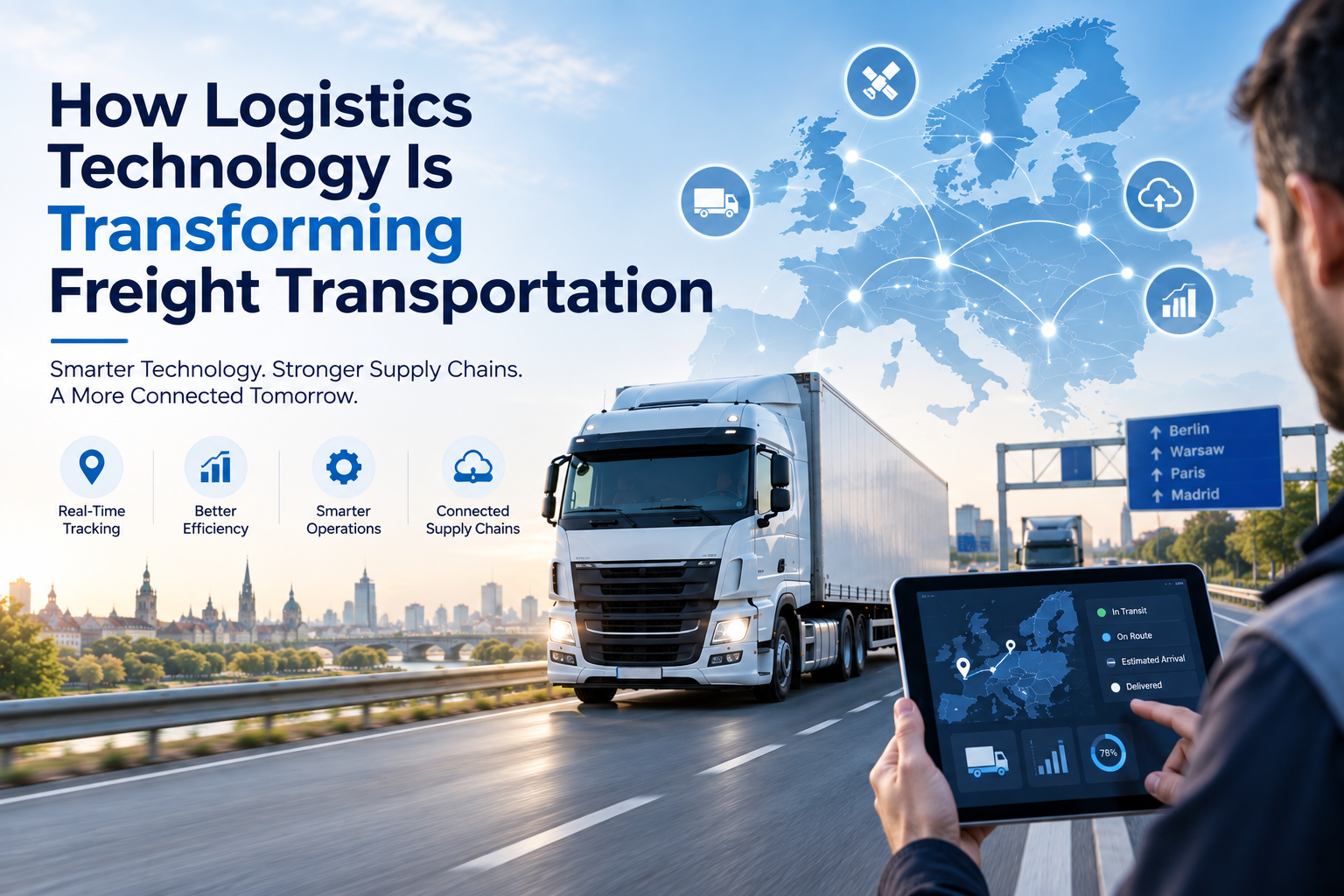
Technology is transforming traditional logistics operations by making transportation more connected, visible and data-driven. From real-time shipment tracking and route optimisation to automated systems and digital communication, modern logistics technology is helping businesses manage freight more efficiently.
For companies operating across competitive markets, adopting the right technology can create opportunities to improve efficiency, reduce unnecessary costs and provide better service.
What Is Logistics Technology?
Logistics technology refers to digital tools, software and systems used to plan, manage, monitor and improve the movement of goods.
These technologies can support different areas of freight transportation, including:
- Route planning
- Shipment tracking
- Fleet management
- Freight scheduling
- Transportation management
- Warehouse coordination
- Digital documentation
- Supply chain visibility
- Data analysis
- Customer communication
Instead of relying on disconnected systems and manual processes, businesses can use technology to connect different parts of their logistics operations.
The result is a more coordinated approach to freight management.
Why Is Technology Important in Freight Transportation?
Traditional freight transportation can involve many different parties.
A single shipment may involve a supplier, carrier, warehouse, driver, freight coordinator, customs or border processes and final customer.
Without effective communication, information can become fragmented.
Technology helps connect these activities.
Businesses can gain greater visibility into where shipments are, identify potential delays and make faster decisions when circumstances change.
For modern freight operations, information can be just as important as physical transportation.
1. Real-Time Shipment Tracking
One of the most important developments in modern freight transportation is real-time visibility.
Businesses can use tracking technologies to monitor shipments while they are in transit.
This can provide information such as:
- Current shipment location
- Estimated arrival time
- Delivery progress
- Route information
- Potential delays
Better visibility allows logistics teams to respond to problems more quickly.
It also helps businesses communicate more accurately with their customers.
Instead of relying on estimated updates, companies can have access to more current information about their shipments.
2. Smarter Route Optimisation
Planning an efficient freight route can be complicated.
Transportation teams need to consider distance, traffic, delivery schedules, vehicle capacity and other operational factors.
Modern logistics technology can analyse large amounts of information and help identify more efficient routes.
Better route planning can help businesses:
- Reduce unnecessary mileage
- Improve delivery schedules
- Increase vehicle utilisation
- Reduce fuel consumption
- Respond to changing road conditions
For companies managing large transportation networks, even small improvements in route efficiency can have a significant operational impact.
3. Improved Fleet Management
Fleet management technology allows businesses and logistics providers to better understand how vehicles are being used.
Digital systems can help monitor information such as:
- Vehicle locations
- Driving activity
- Fuel usage
- Maintenance requirements
- Vehicle utilisation
- Delivery performance
This information can help logistics teams identify operational inefficiencies and make better decisions about their transportation resources.
Instead of managing a fleet based only on schedules and manual reports, businesses can use data to understand what is happening across their transportation network.
4. Better Supply Chain Visibility
Freight transportation is connected to the wider supply chain.
A delay in transportation can affect inventory, warehouse operations, production schedules and customer deliveries.
Technology helps businesses connect information across these different stages.
Improved visibility can help companies understand:
What is moving → Where it is → When it will arrive → What happens next
This makes it easier to identify potential bottlenecks and coordinate the next stage of the supply chain.
For businesses operating internationally, this visibility becomes particularly valuable because shipments may travel through multiple locations before reaching their destination.
5. Digital Communication Improves Coordination
Freight transportation involves constant communication.
Drivers, carriers, warehouses, customers and logistics teams may all need to exchange information.
Traditional communication methods can create delays or information gaps.
Digital logistics platforms can bring relevant information into a more connected system.
This can make communication faster and reduce the need for repeated manual updates.
Better communication also helps businesses respond more effectively when delivery schedules or transportation conditions change.
6. Automation Reduces Manual Work
Automation is another major development in logistics technology.
Businesses can automate repetitive processes such as:
- Shipment updates
- Scheduling
- Data entry
- Documentation workflows
- Delivery notifications
- Reporting
Reducing manual work can help logistics teams spend more time on activities that require human judgement and problem-solving.
Automation does not necessarily mean removing people from the logistics process.
Instead, it can give logistics professionals better tools to manage increasingly complex operations.
7. Data Helps Businesses Make Better Decisions
Modern logistics generates enormous amounts of data.
Every shipment can provide information about transportation times, routes, costs, delivery performance and operational efficiency.
Technology allows businesses to analyse this information.
For example, a company might discover that certain routes consistently experience delays or that specific delivery windows create higher transportation costs.
With better data, businesses can identify patterns and make informed changes.
This creates a continuous improvement cycle:
Collect data → Analyse performance → Identify problems → Improve operations → Measure results
8. Technology Can Improve Freight Efficiency
Efficiency is one of the main goals of modern logistics.
Businesses want to move goods reliably while using transportation resources effectively.
Technology can help improve efficiency by supporting:
- Better vehicle utilisation
- Smarter route planning
- More accurate scheduling
- Faster communication
- Improved shipment visibility
- Reduced administrative work
These improvements can contribute to a more streamlined freight operation.
9. Digital Logistics Supports Customer Experience
Customers increasingly expect transparency.
When a shipment is delayed, customers want to know why and when they can expect delivery.
Technology can make it easier for businesses to provide shipment updates and estimated delivery information.
This transparency can improve communication and help build trust.
For businesses, a strong delivery experience can become an important part of customer retention and long-term relationships.
10. Technology Helps Businesses Scale
As a company grows, its freight requirements usually become more complex.
More customers can mean:
- More shipments
- More destinations
- More carriers
- More transportation routes
- More documentation
- More data
Managing this growing complexity manually can become difficult.
Technology provides businesses with systems that can scale alongside their operations.
A company can use digital logistics tools to coordinate larger shipment volumes without relying entirely on additional manual administration.
This makes technology particularly valuable for businesses expanding into new markets.
The Role of Artificial Intelligence in Logistics
Artificial intelligence is also becoming increasingly relevant to logistics.
AI-powered systems can analyse large amounts of data and identify patterns that may be difficult to recognise manually.
Potential applications include:
- Demand forecasting
- Route optimisation
- Predictive maintenance
- Delivery planning
- Risk identification
- Capacity planning
The value of AI in logistics is not simply automation.
It is the ability to help businesses make faster and more informed decisions using large amounts of operational data.
As these technologies continue to develop, their role in freight transportation is likely to expand.
Technology and Sustainable Freight Transportation
Technology can also support more efficient and sustainable freight operations.
Better route planning can reduce unnecessary travel.
Improved vehicle utilisation can help businesses make better use of transportation capacity.
Digital documentation can reduce reliance on paper-based processes.
Data analysis can also help businesses identify areas where resources are being used inefficiently.
Sustainability and operational efficiency can therefore work together.
A more efficient freight operation can potentially reduce both unnecessary costs and resource consumption.
The Future of Freight Transportation
The future of freight transportation will be increasingly connected.
Logistics providers and businesses are likely to place greater emphasis on:
- Real-time visibility
- Digital freight management
- Artificial intelligence
- Automation
- Data-driven decision-making
- Predictive analytics
- Connected fleets
- Digital documentation
- Sustainable transportation
The goal is to create logistics networks that are not only faster, but also more transparent, flexible and resilient.
Technology will continue to play an important role in achieving that goal.
How Businesses Can Prepare for Digital Logistics
Businesses do not necessarily need to transform their entire logistics operation overnight.
A practical approach can begin with identifying the areas where technology could have the greatest impact.
For example:
Start With Visibility
Improve shipment tracking and access to transportation information.
Identify Repetitive Processes
Look for manual activities that could be simplified or automated.
Measure Performance
Track delivery times, transportation costs, vehicle utilisation and other relevant metrics.
Improve Communication
Connect logistics teams, carriers and customers through more efficient digital channels.
Build for Scalability
Choose logistics technology and processes that can support future business growth.
Choosing the Right Logistics Partner
Technology is valuable, but technology alone does not create an effective freight operation.
Businesses also need experienced logistics professionals who understand how to apply technology to real transportation challenges.
When selecting a logistics partner, consider:
- Transportation capabilities
- Geographic coverage
- Shipment visibility
- Communication
- Operational experience
- Flexibility
- Scalability
- Technology capabilities
The strongest logistics solutions combine technology with human expertise.
Modern Freight Transportation With Immensity Global
Technology is changing the way businesses plan, manage and monitor freight transportation.
From real-time tracking and route optimisation to automation and data-driven decision-making, digital logistics solutions can help businesses improve efficiency while providing greater visibility across their supply chains.
At Immensity Global, we understand that modern businesses need logistics solutions that are reliable, flexible and capable of adapting to changing requirements.
By combining efficient transportation with modern logistics practices, businesses can create stronger supply chains and prepare for future growth.
Whether your business requires regular freight transportation, cross-border logistics or scalable transportation support, having the right logistics strategy can make a significant difference.
Smarter logistics. Better visibility. More efficient freight transportation.
If your business is looking for reliable logistics and freight transportation support, contact Immensity Global to discuss your requirements.
Frequently Asked Questions
What is logistics technology?
Logistics technology includes digital tools, software and systems used to manage, monitor and optimise the movement of goods throughout the supply chain.
How does technology improve freight transportation?
Technology can improve freight transportation through better route planning, shipment tracking, fleet management, automation, communication and data analysis.
What is real-time shipment tracking?
Real-time shipment tracking allows businesses to monitor the location and progress of goods while they are being transported.
Can logistics technology reduce transportation costs?
Technology can help businesses identify inefficient routes, improve vehicle utilisation, reduce manual work and make better transportation decisions, which may contribute to lower operational costs.
How does AI affect logistics?
AI can support areas such as demand forecasting, route optimisation, predictive maintenance, capacity planning and risk analysis.
Is logistics technology useful for small businesses?
Yes. Small and growing businesses can use digital logistics tools and professional logistics providers to improve visibility, efficiency and scalability without building every logistics capability internally.
Final Thoughts
Freight transportation is becoming more connected, data-driven and technology-enabled.
Businesses that embrace modern logistics technology can gain better visibility, improve operational efficiency and respond more effectively to changing customer and market requirements.
Technology is not replacing the importance of reliable transportation.
It is making reliable transportation smarter, more visible and more efficient.
For modern businesses, the future of freight transportation is not simply about moving goods.
It is about moving them intelligently.