
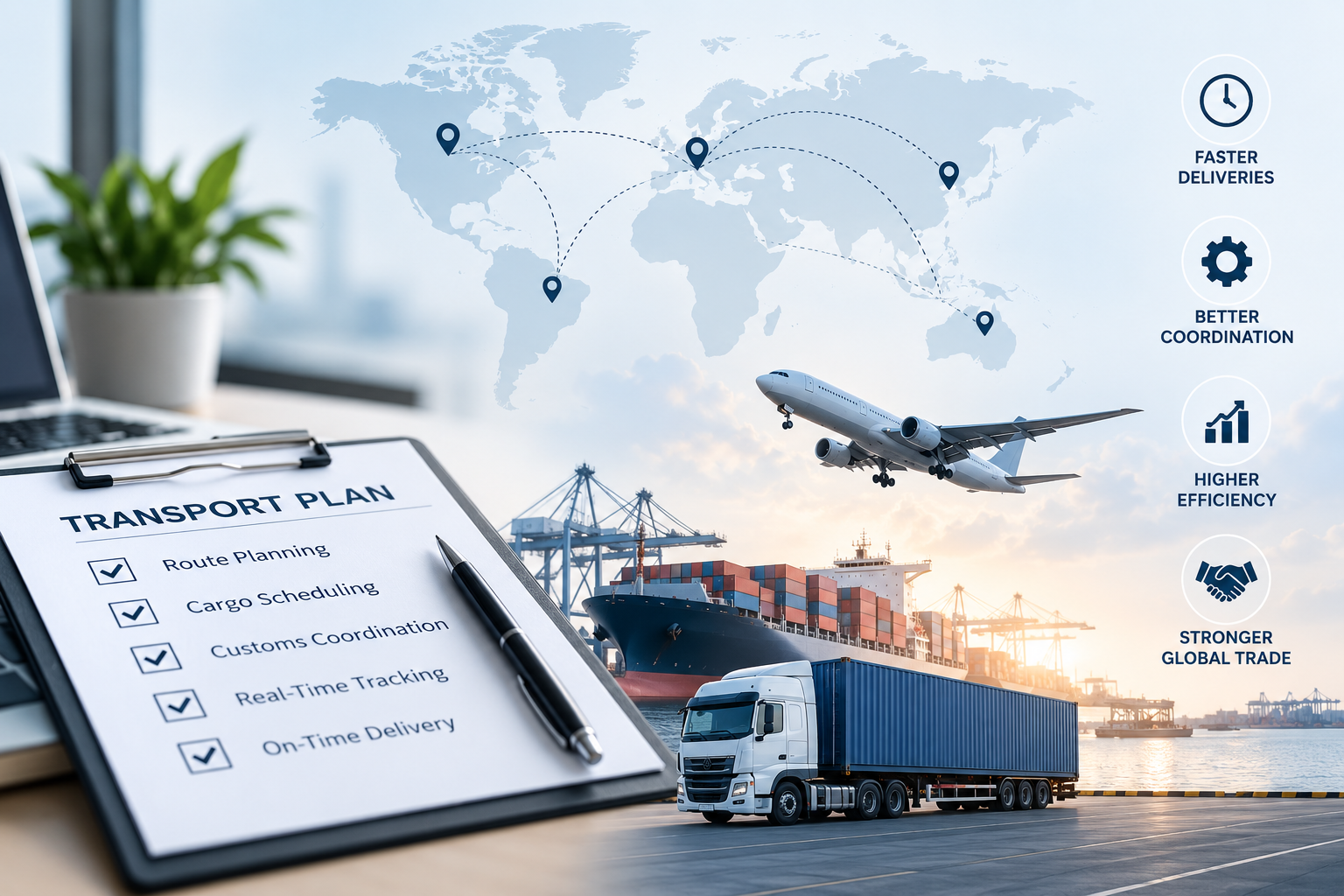
International delivery is more than simply moving goods from one country to another.
Every shipment depends on a series of connected decisions — from choosing the right route and transportation method to scheduling collection, coordinating border requirements and managing final delivery.
When these activities are carefully planned, businesses can create more predictable and efficient freight operations.
This is why efficient transport planning plays such an important role in international logistics.
A well-planned transportation strategy can help businesses reduce unnecessary delays, use transportation resources more effectively and improve delivery times.
For companies serving customers across Europe and other international markets, better transport planning can become an important part of building a reliable supply chain.
What Is Transport Planning?
Transport planning is the process of organising how goods will move from their origin to their final destination.
It can involve decisions about:
- Transportation routes
- Delivery schedules
- Freight capacity
- Transportation modes
- Carrier selection
- Collection times
- Border crossings
- Delivery locations
- Shipment tracking
- Contingency planning
The objective is to create the most suitable transportation plan based on the shipment’s requirements.
Good transport planning considers both the journey and everything that needs to happen before, during and after transportation.
Why Does Transport Planning Affect Delivery Times?
International shipments can involve multiple stages.
For example:
Supplier → Collection → Export → International Transport → Border → Distribution → Final Delivery
A delay at any stage can affect the final arrival time.
Efficient planning helps connect these stages so that transportation activities are coordinated rather than handled independently.
The better the coordination, the easier it can be to maintain a predictable delivery schedule.
1. Better Route Selection
One of the most important elements of transport planning is choosing an appropriate route.
The shortest route is not always the fastest.
Businesses may need to consider:
- Traffic
- Road conditions
- Border crossings
- Infrastructure
- Congestion
- Delivery restrictions
- Transportation availability
A slightly longer route may sometimes provide a more predictable journey.
Effective route planning therefore focuses on the overall journey rather than distance alone.
2. Choosing the Right Transportation Mode
The transportation method can have a major impact on delivery time.
Depending on the shipment, businesses may use:
- Road freight
- Rail freight
- Air freight
- Sea freight
- Multimodal transportation
Each option has different advantages in terms of speed, cost, capacity and geographic coverage.
The right choice depends on the specific requirements of the shipment.
For urgent goods, speed may be the highest priority.
For larger shipments, businesses may place greater emphasis on capacity and cost efficiency.
Good transport planning balances these requirements.
3. Accurate Scheduling
Timing is critical in international logistics.
A shipment may need to arrive at a warehouse before a specific production process begins or reach a customer within a defined delivery window.
Transport planning allows businesses to coordinate collection and delivery schedules more effectively.
This can help avoid unnecessary waiting time between different stages of the journey.
For example:
Collection → Transport → Distribution → Delivery
When each stage is properly scheduled, goods can move more smoothly through the supply chain.
4. Better Coordination Between Logistics Partners
International freight can involve multiple companies.
Suppliers, carriers, warehouses, customs representatives and customers may all need to coordinate.
If one party does not have the correct information, the shipment can be delayed.
Efficient transport planning helps establish clear responsibilities and communication between the different participants.
This can improve coordination and reduce avoidable waiting time.
5. Improved Freight Capacity Planning
Transportation capacity needs to match shipment requirements.
If a business waits too long to arrange transportation, available capacity may become limited.
This can be particularly challenging during periods of high demand.
Advance transport planning allows businesses to consider:
- Shipment volume
- Vehicle availability
- Delivery schedules
- Seasonal demand
- Route requirements
Better capacity planning can make transportation schedules more predictable.
6. More Effective Cross-Border Planning
International shipments often cross borders.
This introduces additional considerations that businesses need to account for during transportation planning.
Depending on the shipment, businesses may need to prepare relevant:
- Customs information
- Commercial documentation
- Product details
- Transport documents
- Import or export information
Preparing these requirements in advance can help reduce avoidable interruptions during the journey.
7. Real-Time Tracking Improves Response Times
Even the best transport plan can be affected by unexpected events.
Real-time shipment tracking gives logistics teams better visibility into transportation progress.
They can monitor:
- Current shipment location
- Estimated arrival
- Route progress
- Delivery status
- Potential delays
If something changes, the business can respond sooner.
This is important because reducing the impact of a delay often depends on how quickly it is identified.
8. Contingency Planning Keeps Freight Moving
Reliable transportation planning should include alternatives.
A route may become unavailable. A carrier may experience a capacity issue. Weather may affect transportation.
Businesses cannot predict every disruption, but they can prepare for possible scenarios.
Contingency plans may include:
- Alternative routes
- Backup carriers
- Different transportation modes
- Flexible delivery schedules
- Alternative distribution locations
Having options available can make international logistics more resilient.
9. Better Planning Reduces Unnecessary Waiting Time
Waiting can occur at many points in a logistics process.
A vehicle may arrive before a warehouse is ready.
A shipment may wait for the next transportation connection.
A delivery may be delayed because the receiving location is unavailable.
Better coordination can reduce unnecessary waiting.
Transport planning should therefore consider the entire movement of goods rather than only the driving or transit time.
10. Transport Planning Improves Vehicle Utilisation
Efficient transportation is also about using available vehicles effectively.
Businesses and logistics providers can consider:
- Vehicle capacity
- Shipment size
- Route length
- Number of deliveries
- Collection and delivery schedules
Better vehicle utilisation can improve overall transportation efficiency while helping businesses make better use of available capacity.
11. Better Planning Supports Predictable Delivery Times
Customers value predictability.
A business may not always be able to guarantee an exact delivery time, but better transport planning can help create more realistic delivery estimates.
Reliable delivery information allows customers to plan accordingly.
It also helps businesses coordinate their own operations around expected shipment arrivals.
Predictability is particularly important for businesses that depend on regular international freight.
12. Efficient Planning Can Help Control Transportation Costs
Delivery speed and transportation costs are closely connected.
Businesses that frequently use urgent transportation because of poor planning may face higher costs.
Better planning can reduce the need for unnecessary last-minute solutions.
It can also help businesses compare transportation options based on:
- Cost
- Speed
- Capacity
- Reliability
The goal is to find the most appropriate transportation solution rather than simply choosing the cheapest or fastest option.
13. Transport Planning Supports Inventory Management
Transportation delays can affect inventory.
If incoming goods arrive later than expected, businesses may face stock shortages.
If companies compensate by holding excessive inventory, storage costs can increase.
Better transportation planning can improve the predictability of incoming freight.
This can help businesses coordinate inventory replenishment more effectively.
14. It Improves Customer Experience
Transportation performance directly affects customer experience.
When deliveries arrive reliably, customers gain confidence in the business.
When shipments are delayed without communication, frustration can increase.
Efficient transport planning helps businesses provide more consistent delivery performance.
Combined with shipment tracking and clear communication, it can create a more professional logistics experience.
15. Data Makes Transport Planning Smarter
Modern logistics generates valuable transportation data.
Businesses can analyse previous shipments to understand:
- Average transit times
- Common delays
- Route performance
- Carrier performance
- Seasonal patterns
- Transportation costs
This information can improve future planning.
Instead of making transportation decisions based entirely on assumptions, businesses can use historical performance to make more informed choices.
The Role of Technology in Transport Planning
Technology is changing how businesses manage freight transportation.
Modern logistics platforms can support:
- Route optimisation
- Shipment tracking
- Delivery scheduling
- Fleet management
- Digital documentation
- Performance reporting
- Automated notifications
These tools can improve visibility and help logistics teams respond more quickly when circumstances change.
Technology is most effective when combined with experienced logistics management.
Common Transport Planning Mistakes
Businesses can unintentionally create delivery problems through poor planning.
Planning Too Late
Last-minute transportation arrangements can limit available options.
Choosing Routes Based Only on Distance
The shortest route is not necessarily the most reliable.
Ignoring Border Requirements
International shipments may require additional documentation and procedures.
Not Allowing Enough Time
Unrealistic schedules can create pressure throughout the supply chain.
Poor Communication
Information gaps between logistics partners can create avoidable delays.
No Backup Plan
Without alternative options, unexpected disruptions can have a larger impact.
How Businesses Can Improve Transport Planning
Businesses can improve their international transportation operations by following a structured process.
Step 1: Understand the Shipment
Review the product, quantity, dimensions, destination and delivery requirements.
Step 2: Select the Right Transportation Mode
Compare road, rail, air, sea or multimodal options based on the shipment.
Step 3: Plan the Route
Consider distance, traffic, borders, infrastructure and potential disruptions.
Step 4: Confirm Capacity
Arrange appropriate transportation capacity in advance.
Step 5: Prepare Documentation
Make sure relevant shipping and customs information is accurate and complete.
Step 6: Set Realistic Delivery Expectations
Build schedules around realistic transit times.
Step 7: Track the Shipment
Use available tracking tools to monitor progress.
Step 8: Prepare Alternatives
Have backup routes or transportation options where appropriate.
Step 9: Review Performance
Analyse completed shipments and use the results to improve future planning.
Choosing the Right Logistics Partner
Effective transport planning becomes easier when businesses work with an experienced logistics provider.
When evaluating a logistics partner, consider:
- European and international coverage
- Transportation capabilities
- Route planning expertise
- Shipment tracking
- Communication
- Flexibility
- Capacity
- Experience with cross-border freight
- Ability to scale with your business
A good logistics partner should be able to understand your requirements and develop transportation solutions around them.
Efficient International Transport With Immensity Global
International delivery depends on many connected decisions.
The right route, transportation method, schedule, capacity and communication can all influence how efficiently a shipment reaches its destination.
At Immensity Global, we understand that reliable freight transportation starts with effective planning.
Our approach focuses on helping businesses coordinate their transportation requirements while maintaining dependable logistics operations.
Whether you need European freight transportation, cross-border logistics or international shipment support, effective transport planning can help create a more predictable supply chain.
Better planning. Better coordination. More reliable deliveries.
If your business needs dependable international freight transportation and logistics support, contact Immensity Global to discuss your requirements.
Frequently Asked Questions
What is efficient transport planning?
Efficient transport planning is the process of organising routes, schedules, transportation modes, capacity and logistics activities to move goods as reliably and efficiently as possible.
How does transport planning improve delivery times?
It can reduce unnecessary waiting, improve route selection, coordinate transportation stages and help businesses respond faster to potential delays.
Why is route planning important for international freight?
International routes can involve traffic, borders, congestion and other variables. Careful route planning helps businesses select more suitable and predictable transportation options.
Which transportation method is best for international shipping?
There is no single best option. The appropriate method depends on the shipment’s urgency, size, destination, cost requirements and other factors.
Can real-time tracking improve delivery performance?
Tracking does not prevent every delay, but it gives businesses better visibility and allows them to respond sooner when transportation conditions change.
How can businesses reduce international delivery delays?
Businesses can improve documentation, plan routes carefully, arrange capacity early, monitor shipments, communicate with logistics partners and maintain contingency options.
Why is contingency planning important?
Alternative routes, carriers or transportation methods can help businesses respond when unexpected disruptions affect the original transportation plan.
Final Thoughts
Efficient transport planning is one of the foundations of reliable international logistics.
By carefully coordinating routes, transportation methods, schedules, capacity, documentation and shipment tracking, businesses can improve delivery predictability and reduce avoidable delays.
The objective is not simply to find the fastest route.
It is to create a transportation plan that balances speed, reliability, cost and flexibility.
For businesses operating internationally, better transport planning can mean fewer surprises, stronger customer relationships and a more efficient supply chain.
Plan the journey carefully. Keep freight moving. Deliver with confidence.