
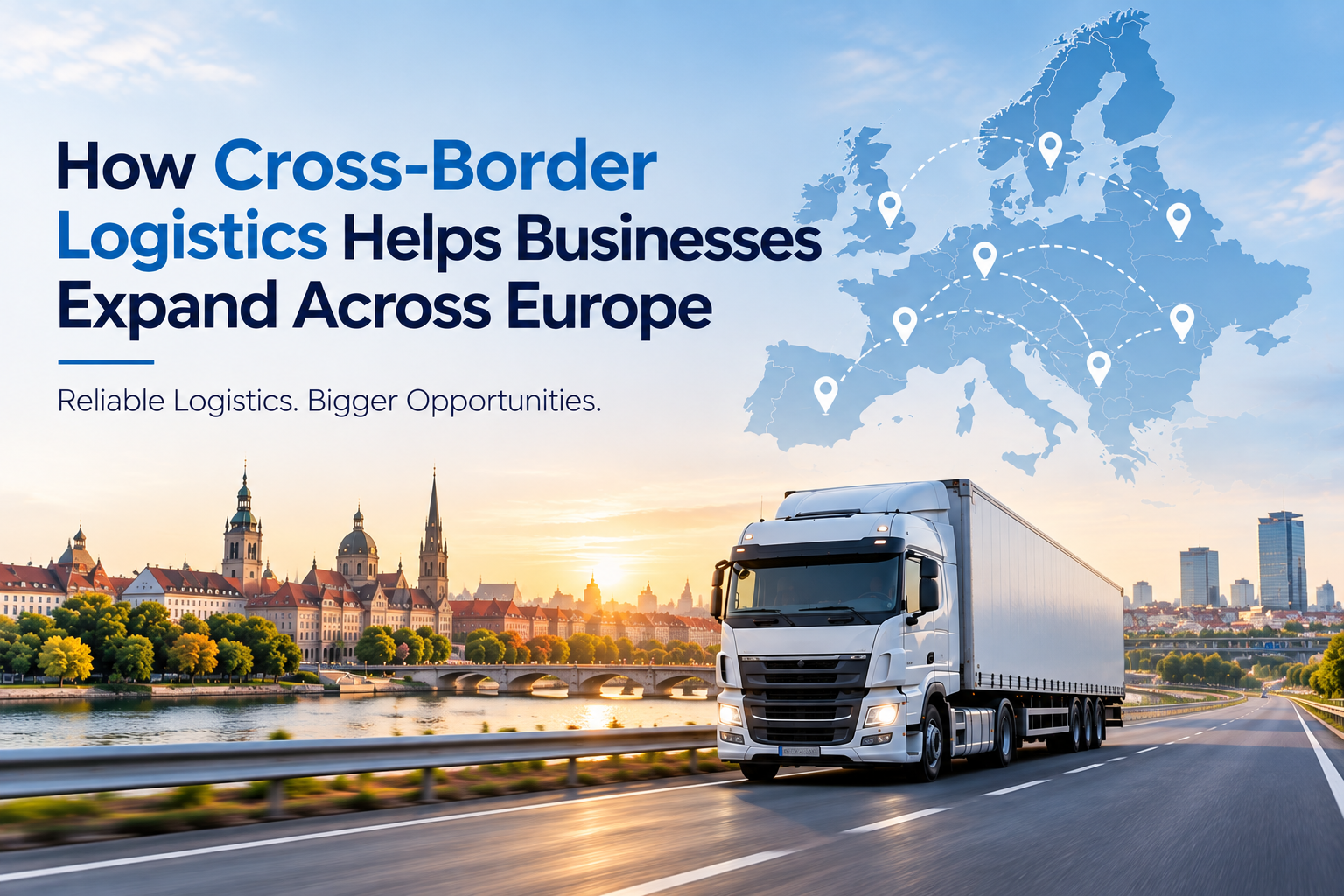
Expanding into new European markets can create major opportunities for businesses. From reaching new customers and suppliers to building a stronger international presence, Europe offers a connected market with significant potential for growth.
However, successful expansion is about more than finding new customers. Businesses also need a reliable way to move products between countries, manage deliveries, control logistics costs and maintain a consistent customer experience.
This is where cross-border logistics in Europe becomes essential.
A well-organised cross-border logistics strategy helps businesses move goods efficiently across European markets while coordinating transportation, documentation, warehousing, delivery and supply chain operations.
For companies looking to expand across Europe, choosing the right logistics partner can make the difference between a complicated expansion and a scalable one.
What Is Cross-Border Logistics?
Cross-border logistics refers to the planning and management of goods moving between different countries.
It can include:
- International freight transportation
- Road freight across European countries
- Warehousing and distribution
- Shipment planning and coordination
- Customs and documentation support where applicable
- Delivery scheduling
- Shipment tracking and visibility
- Supply chain coordination
- Multimodal transportation
Cross-border logistics is not simply about transporting goods from Point A to Point B. It involves coordinating multiple stages of the supply chain so that products reach the right destination efficiently and reliably.
For growing companies, this can provide the infrastructure needed to enter new markets without having to build an entire logistics operation from the ground up.
Why Cross-Border Logistics Matters for European Expansion
Europe provides businesses with access to multiple markets, but operating across countries can introduce logistical challenges.
Different routes, transportation networks, delivery requirements, documentation processes and local operating conditions can all affect the movement of goods.
A strong logistics strategy helps businesses manage these challenges while keeping their supply chains flexible.
Here are some of the key ways cross-border logistics supports business expansion across Europe.
1. Reach New European Markets More Efficiently
Entering a new market requires more than marketing and sales.
Once customers begin placing orders, businesses need to fulfil those orders consistently.
Reliable freight transportation allows companies to serve customers in multiple European locations without treating every new country as an entirely separate logistics operation.
With the right logistics network, businesses can coordinate shipments across multiple destinations and build a more scalable distribution model.
This is particularly important for companies experiencing growing order volumes.
Instead of creating separate logistics processes for every market, businesses can develop a coordinated European supply chain.
2. Improve Delivery Reliability
Customers expect products to arrive when promised.
Delayed shipments can affect customer satisfaction, business relationships and future sales.
Cross-border logistics providers can help businesses plan transportation routes, coordinate carriers and manage delivery schedules more effectively.
Better planning can also help businesses respond to potential disruptions before they become larger problems.
Reliable transportation is especially important for companies operating in competitive markets where delivery experience can influence customer loyalty.
3. Control International Logistics Costs
International expansion can increase logistics costs if transportation is not properly planned.
Businesses may face unnecessary expenses caused by inefficient routes, poor shipment planning, underutilised transport capacity or unnecessary handling.
A professional logistics strategy focuses on finding efficient transportation solutions based on shipment size, destination, timing and operational requirements.
For example, depending on the shipment, businesses may use road, rail, sea or a combination of transportation modes.
The European Commission highlights multimodal and intermodal transport as an important part of creating more efficient and sustainable freight networks across Europe.
The goal is not simply to choose the cheapest transport option. It is to find the right balance between cost, speed, reliability and service quality.
4. Simplify Complex Supply Chain Operations
As a business enters more countries, its supply chain naturally becomes more complex.
A company may have:
- Suppliers in one country
- Warehouses in another
- Distribution centres in another
- Customers across multiple European markets
Managing all of these moving parts internally can become difficult as the business grows.
A logistics partner can help coordinate transportation and distribution activities, giving businesses a central point of coordination.
This allows management teams to spend more time focusing on sales, customers and growth rather than dealing with individual transportation issues.
5. Support Better Supply Chain Visibility
Visibility is becoming increasingly important in modern logistics.
Businesses need to know where shipments are, when they are expected to arrive and whether potential delays could affect customers or operations.
Digital logistics systems can improve communication between businesses, carriers and other supply chain partners.
The European Commission identifies digitalisation as an important way to improve supply-chain visibility, information sharing, traffic and cargo management, while reducing administrative burdens.
For businesses expanding across Europe, better visibility means better decision-making.
When logistics teams have access to accurate shipment information, they can respond faster and keep customers informed.
6. Help Businesses Manage Cross-Border Requirements
Moving goods internationally requires attention to documentation, transport regulations and other compliance requirements.
The exact requirements can depend on factors such as:
- The countries involved
- Type of goods
- Origin and destination
- Transportation method
- Commercial arrangements
- Applicable customs requirements
This is one reason why working with experienced logistics professionals can be valuable.
A logistics partner can help businesses organise the information and documentation required for their shipments and identify potential issues before goods are dispatched.
Good preparation can reduce avoidable delays and make international transportation more predictable.
7. Create a Scalable European Distribution Network
One of the biggest advantages of effective cross-border logistics is scalability.
A business may initially serve customers in one or two European countries.
As demand grows, it may expand into additional markets.
The logistics strategy needs to grow with it.
A scalable logistics network can support:
One market → Multiple markets → Regional distribution → Wider European coverage
This means businesses can expand their geographic reach without constantly rebuilding their transportation processes.
For growing companies, scalability can be just as important as the initial cost of transportation.
8. Strengthen Customer Experience
Logistics is closely connected to customer experience.
Customers may never interact directly with a company’s logistics provider, but they experience the results through:
- Delivery times
- Shipment reliability
- Communication
- Order accuracy
- Tracking information
- Handling of delivery issues
A dependable logistics operation can therefore become an important part of a company’s overall customer experience.
When customers receive their orders reliably and on time, businesses can build greater confidence and long-term relationships.
9. Make European Expansion More Flexible
Markets can change quickly.
Customer demand can increase in one country while slowing in another. A new customer may require deliveries to a different location, or a business may need to change its distribution strategy.
Flexible logistics gives businesses the ability to adapt.
Instead of relying on a fixed transportation model, companies can use different routes, carriers, warehouses or transportation modes depending on their changing requirements.
This flexibility can be especially valuable for businesses entering Europe for the first time.
10. Support More Sustainable Freight Operations
Sustainability is becoming an increasingly important consideration for European businesses.
Efficient route planning, better vehicle utilisation and the appropriate use of multimodal transportation can help businesses improve the efficiency of their freight operations.
The European Commission is actively promoting multimodal freight transport and more interconnected transport systems as part of the transition toward more sustainable European mobility.
For businesses, sustainability and efficiency can therefore work together.
Reducing unnecessary transport movements and improving logistics planning can potentially support both operational performance and environmental objectives.
Cross-Border Logistics and the Future of European Trade
European logistics is becoming increasingly digital.
The EU’s electronic freight transport information framework is designed to move freight information away from paper-based processes and towards secure electronic data sharing. The European Commission states that the eFTI Regulation will apply in full from 9 July 2027, with certified platforms and supporting systems being developed ahead of that date.
For businesses, this wider shift toward digital logistics means that technology, data visibility and efficient information sharing will continue to play an important role in international freight operations.
Companies that build flexible and well-connected supply chains will be better positioned to respond to changing customer expectations and European market opportunities.
How to Choose the Right Cross-Border Logistics Partner
Choosing a logistics provider is an important decision when expanding across Europe.
Businesses should consider several factors before selecting a partner.
European Network and Coverage
Look for a provider capable of supporting the countries and routes relevant to your business.
Transportation Capabilities
Consider whether the provider can offer the transportation solution your business needs, including road freight and other relevant transport modes.
Communication and Visibility
Clear communication and shipment tracking can make international logistics much easier to manage.
Flexibility
Your logistics requirements may change as your business grows. Choose a provider that can adapt to changing shipment volumes, destinations and schedules.
Experience
Cross-border transportation requires knowledge of international logistics processes and the practical challenges involved in moving goods between markets.
Scalability
Your logistics partner should be able to support your business not only today but also as you expand into additional European markets.
Why Businesses Choose Professional Cross-Border Logistics Services
Managing international logistics internally can require significant time, resources and operational expertise.
Working with a professional logistics provider allows businesses to access transportation knowledge and operational support without building every part of the logistics network themselves.
For companies expanding across Europe, this can provide several advantages:
- Greater operational efficiency
- Better transportation coordination
- Improved shipment visibility
- More flexible distribution
- Reduced logistics complexity
- Support for international growth
- Better customer delivery experience
The right logistics strategy allows businesses to focus on what they do best while their logistics operations are managed professionally.
Expand Across Europe With a Stronger Logistics Strategy
European expansion creates exciting opportunities, but growth depends on having the right infrastructure behind the business.
Cross-border logistics in Europe provides the transportation, coordination and supply chain support businesses need to move products between markets efficiently.
From freight transportation and route planning to shipment visibility and scalable distribution, effective logistics can help businesses turn European expansion into a more manageable and sustainable growth strategy.
At Immensity Global, we understand that every business has different transportation and logistics requirements. Our goal is to help businesses move goods efficiently while creating dependable logistics solutions that can support their growth.
If your business is looking to expand its operations across Europe, a strong logistics strategy is the place to start.
Ready to simplify your European logistics operations? Contact Immensity Global to discuss your transportation and logistics requirements.
Frequently Asked Questions
What is cross-border logistics?
Cross-border logistics is the management of goods transported between different countries. It can include freight transportation, shipment planning, documentation, warehousing, distribution and delivery coordination.
Why is cross-border logistics important for businesses expanding in Europe?
It helps businesses reach customers in different European markets while coordinating transportation, deliveries, supply chain activities and other logistics requirements.
How can cross-border logistics reduce business complexity?
A professional logistics provider can coordinate transportation and distribution activities across multiple destinations, reducing the need for businesses to manage every logistics process independently.
What transportation options are available for European freight?
Depending on the shipment and destination, businesses may use road, rail, sea, air or multimodal transportation solutions.
How does technology improve cross-border logistics?
Digital logistics technologies can improve shipment visibility, information sharing, planning and communication between supply-chain participants.
How can businesses choose a European logistics provider?
Businesses should evaluate network coverage, transportation capabilities, communication, visibility, flexibility, experience and scalability before selecting a logistics partner.
Is cross-border logistics suitable for small businesses?
Yes. Small and growing businesses can use professional logistics services to access transportation capabilities and international supply-chain expertise without building a complete logistics operation internally.
Final Thoughts
Expanding across Europe requires more than a good product or service. Businesses also need a logistics network capable of supporting their growth.
With the right cross-border logistics partner, companies can improve transportation efficiency, reach new markets, strengthen customer experience and build a supply chain designed for long-term European growth.
The right logistics strategy does more than move goods.
It helps move your business forward.