
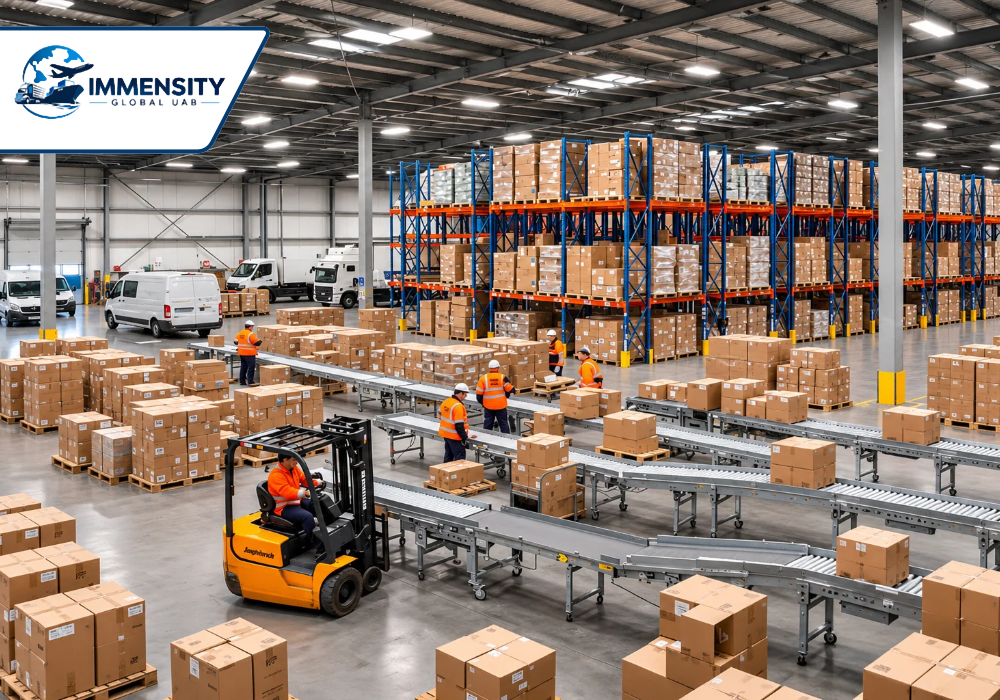
Managing stock across multiple European countries can be challenging. Businesses must organise storage, track inventory, handle orders and arrange deliveries while keeping costs under control. Delays, poor stock visibility and inefficient warehouse operations can affect customer satisfaction and business growth.
This is where warehouse logistics in Europe becomes important. A well-organised warehouse network helps businesses store goods safely, manage inventory and move products efficiently across borders. It also connects warehousing with road, rail, sea and air freight to create a smoother supply chain.
For importers, exporters, manufacturers, wholesalers and e-commerce sellers, choosing the right warehousing partner can make everyday operations easier. However, businesses need to understand the services, costs and European transport requirements before making a decision.
What Is Warehouse Logistics in Europe?
Warehouse logistics refers to the planning, storage, handling and movement of goods within a warehouse and throughout the wider supply chain. It covers everything from receiving products to storing inventory, preparing orders and arranging final deliveries.
In Europe, warehouse logistics also involves managing shipments between countries, coordinating transport networks and meeting relevant customs and regulatory requirements.
A complete warehouse logistics solution may include:
-
Goods receiving: Checking incoming shipments and recording products.
-
Inventory management: Monitoring stock levels and product movements.
-
Storage management: Organising goods according to size, weight and storage requirements.
-
Order fulfilment: Picking, packing and preparing orders for dispatch.
-
Distribution: Arranging deliveries to retailers, customers and business locations.
-
Returns management: Handling returned products and organising their storage or redistribution.
These activities help businesses maintain better stock control and avoid unnecessary delays.
Why Do Businesses Need International Warehousing Services?
Expanding into European markets can create new opportunities. However, storing and distributing products across different countries requires proper planning.
International warehousing services help businesses position inventory closer to their customers and distribution points. This can reduce unnecessary transport movements and support faster order fulfilment.
Here are some situations where businesses may need professional warehousing support.
1. Expanding into New European Markets
Businesses entering countries such as Germany, France, the Netherlands, Belgium or Poland may need storage facilities closer to their customers.
A suitable warehouse location can help manage regional stock and organise deliveries across nearby markets.
2. Managing Growing E-commerce Orders
Online retailers often handle orders of different sizes and delivery requirements. They need organised inventory systems to process orders accurately.
Warehousing support can help manage incoming stock, order preparation and product distribution.
3. Storing Imported Goods
Importers receiving products through European ports may need temporary or long-term storage before goods move to their final destinations.
A warehouse near a major port or transport corridor can make onward distribution easier.
4. Supporting Manufacturing Operations
Manufacturers often need a steady supply of raw materials, components and finished products.
Warehousing helps organise these goods and supports production schedules by keeping stock accessible when required.
Key Benefits of Warehouse Logistics in Europe
An efficient warehouse operation does more than provide storage space. It helps businesses manage their entire supply chain more effectively.
Better Inventory Control
Accurate inventory records help businesses understand what stock they have, where it is stored and when they need to reorder.
This reduces the risk of stock shortages, excess inventory and misplaced goods.
Lower Operating Costs
Poor warehouse planning can increase storage charges, handling expenses and transport costs.
A well-organised operation helps businesses use available space efficiently, plan deliveries and avoid unnecessary movements. As a result, companies can improve their overall logistics spending.
Faster Order Processing
Organised picking, packing and dispatch processes help warehouses prepare orders more efficiently.
This is especially useful for e-commerce sellers and wholesalers handling frequent customer orders.
Improved Supply Chain Visibility
Businesses need clear information about their stock and shipments.
Inventory records, shipment updates and real-time tracking help managers make informed decisions and respond to unexpected changes.
Flexible Storage Solutions
Different products require different storage conditions. Some goods need standard pallet storage, while others require temperature-controlled facilities or specialised handling.
Flexible warehousing arrangements help businesses manage changing inventory requirements.
How to Choose the Right Warehouse Logistics Partner in Europe
Choosing a warehouse provider is an important business decision. The right partner should understand your products, transport requirements, storage needs and delivery expectations.
When comparing 3pl warehouse companies Europe, consider the following factors.
1. Warehouse Location
Location affects transport time, distribution costs and access to important markets.
Consider facilities near major industrial areas, highways, railway connections, airports and seaports. For example, businesses serving Northern and Eastern Europe may benefit from suitable logistics connections through Lithuania and the wider Baltic region.
2. Storage Capacity and Facilities
Check whether the provider can handle your products safely.
Ask about:
-
Available warehouse space.
-
Pallet and bulk storage options.
-
Loading and unloading facilities.
-
Temperature-controlled storage, where required.
-
Forklift and material-handling equipment.
-
Security and access controls.
The facility should match your current requirements and allow room for future growth.
3. Transport and Distribution Network
Warehousing works best when it connects smoothly with transport services.
Choose a provider that can coordinate road, rail, sea and air freight where needed. This can simplify the movement of goods from ports and warehouses to business locations.
4. Technology and Tracking
Ask how the provider manages inventory and shipment information.
A suitable warehouse management system can support stock records, order processing and warehouse operations. Real-time shipment tracking also helps businesses monitor deliveries.
5. Transparent Pricing
Warehouse costs can vary depending on the services required.
Request a clear quotation that explains storage charges, handling fees, additional services and transport costs. This makes it easier to compare providers and plan your logistics budget.
6. Customer Support
Good communication matters when shipments are delayed or stock requirements change.
Look for a provider that offers accessible support, clear updates and practical solutions when problems occur.
Understanding European Warehousing and Transport Networks
Europe has an extensive network of roads, railways, airports and seaports. Businesses can use these connections to move products between manufacturing centres, distribution hubs and customer locations.
However, warehouse location and transport planning should work together.
Major European Logistics Hubs
Some European locations are particularly important for international trade and distribution.
The Port of Klaipėda offers access to Baltic trade routes and supports cargo movements across Lithuania and neighbouring markets.
For businesses operating in the Baltic and Eastern European regions, Lithuania can also provide useful connections to Poland, Latvia, Estonia and other European destinations.
Cross-Border Transport Within the EU
One advantage of operating within the EU is the customs union. Goods that have been properly cleared for free circulation can generally move between EU Member States without additional internal customs duties.
Nevertheless, businesses must still consider transport documentation, VAT obligations, product regulations and any applicable checks. Special rules may also apply to controlled or restricted products.
Consilium+1
Warehouse providers should understand how these requirements affect stock movements and delivery schedules.
Post-Brexit UK-EU Shipments
Businesses shipping between Great Britain and the EU must plan for customs formalities.
Depending on the shipment, requirements may include:
-
Import and export customs declarations.
-
Commercial invoices and packing lists.
-
Commodity codes and country-of-origin details.
-
Applicable VAT and duty arrangements.
-
Safety and security information.
-
Relevant licences or certificates for controlled goods.
The EU-UK Trade and Cooperation Agreement allows qualifying goods to receive zero tariffs and zero quotas when they meet the relevant rules of origin. However, this does not remove customs formalities. Northern Ireland also has separate arrangements.
Taxation and Customs Union+1
Businesses should confirm documentation requirements before dispatch to reduce the risk of border delays.
EU Regulations and Warehouse Operations
European warehouse operators and their customers must consider several areas of compliance.
These may include workplace health and safety, fire protection, product safety, environmental requirements and rules for handling specific categories of goods.
For example, food products, chemicals, pharmaceuticals and dangerous goods can require additional storage controls, documentation or authorisations. Requirements depend on the product and the country involved.
Businesses should check applicable EU and national regulations before selecting a storage facility.
Choosing the Right Freight Method for Warehouse Distribution
Warehousing and transport should work together. The right freight method depends on shipment size, delivery deadlines, product type and budget.
Here is a simple comparison of the main transport options.
| Freight method | Best suited for | Main advantage |
|---|---|---|
| Road freight | Regional and cross-border deliveries | Flexible routes and door-to-door transport |
| Rail freight | Large shipments over longer distances | Useful for planned, high-volume movements |
| Sea freight | International container shipments | Suitable for large cargo volumes |
| Air freight | Urgent and time-sensitive goods | Faster international transport |
A business importing containers through Rotterdam, for example, may use container haulage to move goods to a warehouse. From there, road freight can distribute products to customers in different countries.
Similarly, manufacturers moving heavy equipment may require heavy haulage, open deck or step frame transport instead of standard trailers.
The best approach is to select a transport method based on the cargo and delivery requirements rather than price alone.
What Affects Warehouse Logistics Costs in Europe?
Warehouse expenses vary according to the type of goods, storage period, facility location and services required.
Before requesting a quotation, understand the main cost factors.
1. Storage Space and Duration
Warehouse providers may calculate storage charges according to pallet positions, floor space, volume or the number of days goods remain in storage.
Larger shipments and longer storage periods generally require a higher budget.
2. Handling and Labour
Receiving, unloading, sorting, picking, packing and loading all involve operational costs.
Special handling requirements may also increase charges.
3. Warehouse Location
Facilities near major ports, airports and industrial areas may have different pricing structures.
Compare the total cost of storage and onward delivery rather than selecting a warehouse based only on its rental price.
4. Transport Distance
The distance between suppliers, warehouses and customers affects the final transport cost.
Cross-border movements may also involve tolls, fuel charges and additional administrative requirements.
5. Special Equipment and Storage
Some products require forklifts, temperature-controlled storage, secure areas or specialised vehicles.
These requirements should be included when preparing a logistics budget.
Practical tip: Request an itemised quotation. It should explain storage, handling, equipment, transport and any additional charges.
Common Warehouse Logistics Mistakes Businesses Should Avoid
Even a well-planned supply chain can face problems when warehouse operations are not managed properly.
Here are some common mistakes to avoid.
-
Choosing a warehouse based only on price: A cheaper facility may increase overall costs if it is far from your customers or transport routes.
-
Ignoring inventory accuracy: Incorrect stock records can lead to missed orders and unnecessary purchases.
-
Not planning seasonal demand: Peak periods can increase storage requirements and delivery pressure.
-
Overlooking customs documents: Missing paperwork can delay shipments between the UK and EU.
-
Ignoring product requirements: Some goods need special storage conditions and handling procedures.
-
Poor communication: Without regular updates, businesses may struggle to respond to stock or delivery problems.
Planning ahead and working with an experienced logistics partner can help reduce these risks.
How Immensity Global Supports Warehouse Logistics in Europ
Immensity Global is an international logistics company headquartered in Vilnius, Lithuania. Operating since 2022, the company supports businesses that need coordinated freight and logistics services across European markets.
Its approach focuses on practical transport solutions, clear communication and efficient cargo movement.
Integrated Freight and Logistics Services
Immensity Global offers several services to support different cargo requirements, including:
-
Air freight and sea freight.
-
Road freight and rail freight.
-
Warehousing and distribution.
-
Container haulage and drayage services.
-
Heavy haulage and open deck transport.
-
Curtainsider, tanker and step frame transport.
-
Refrigerated transport.
-
Forklift services.
This range of services helps businesses coordinate different stages of their supply chain through one logistics partner.
Transparent Pricing
Clear pricing helps businesses plan their logistics budgets. Immensity Global focuses on transparent quotations so customers can understand their transport requirements and associated costs.
On-Time Delivery and Real-Time Tracking
Delivery schedules matter to manufacturers, retailers and wholesalers. Shipment tracking helps businesses monitor cargo movements and plan their next operations.
24/7 Online Support
International shipments do not always follow standard office hours. Online support helps customers access assistance when they need shipment information.
Cost Optimisation and Cargo Insurance
Efficient route planning and suitable freight options can help businesses manage logistics expenses. Cargo insurance can also provide financial protection against covered risks during transportation, subject to the policy terms and conditions.
As a logistics company in Europe, Immensity Global aims to help businesses coordinate international freight movements and manage their supply chain requirements.
How to Select the Right International Logistics Company
Businesses comparing global logistics companies should look beyond the availability of warehouse space.
A good logistics partner should understand the complete movement of goods, from the supplier to the final delivery point.
Consider these questions before making a decision:
-
Does the provider understand your industry and cargo requirements?
-
Can it coordinate international freight and warehousing?
-
Does it offer transparent pricing?
-
Can it provide shipment updates and tracking?
-
Does it understand EU and UK cross-border requirements?
-
Can it manage specialised cargo and equipment?
-
Does it provide accessible customer support?
An experienced international logistics company should be able to explain its services clearly and recommend suitable solutions based on your business requirements.
Frequently Asked Questions
1. How do I choose a warehouse logistics provider in Europe?
Compare warehouse locations, storage facilities, handling capabilities, transport connections, pricing and tracking systems. Also, check whether the provider understands your industry and cross-border shipping requirements.
2. What are international warehousing services?
International warehousing services include receiving imported goods, storing inventory, managing stock, preparing orders and arranging distribution across different countries.
3. What affects warehouse storage costs in Europe?
Storage costs depend on warehouse location, required space, storage duration, handling activities and special equipment. Additional services, such as packing and distribution, may also affect the total price.
4. Do shipments between the UK and EU require customs clearance?
Generally, shipments between Great Britain and EU countries require customs declarations and relevant supporting documents. However, specific arrangements apply to Northern Ireland. Businesses should check the requirements for their particular shipment.
Conclusion: Build a More Efficient European Supply Chain
Effective warehouse management helps businesses control inventory, organise deliveries and manage operating costs. However, selecting the right warehouse location and transport partner is equally important.
From port-based storage to cross-border distribution, businesses need logistics solutions that match their cargo, delivery schedules and growth plans.
Immensity Global supports businesses with warehousing, road freight, sea freight, air freight, rail freight and specialised transport services. With transparent pricing, real-time tracking and 24/7 online support, the company aims to simplify international cargo movements.
Looking for practical logistics solutions for your European operations?
Get a free freight quote and discuss your warehousing and transportation requirements with Immensity Global.