
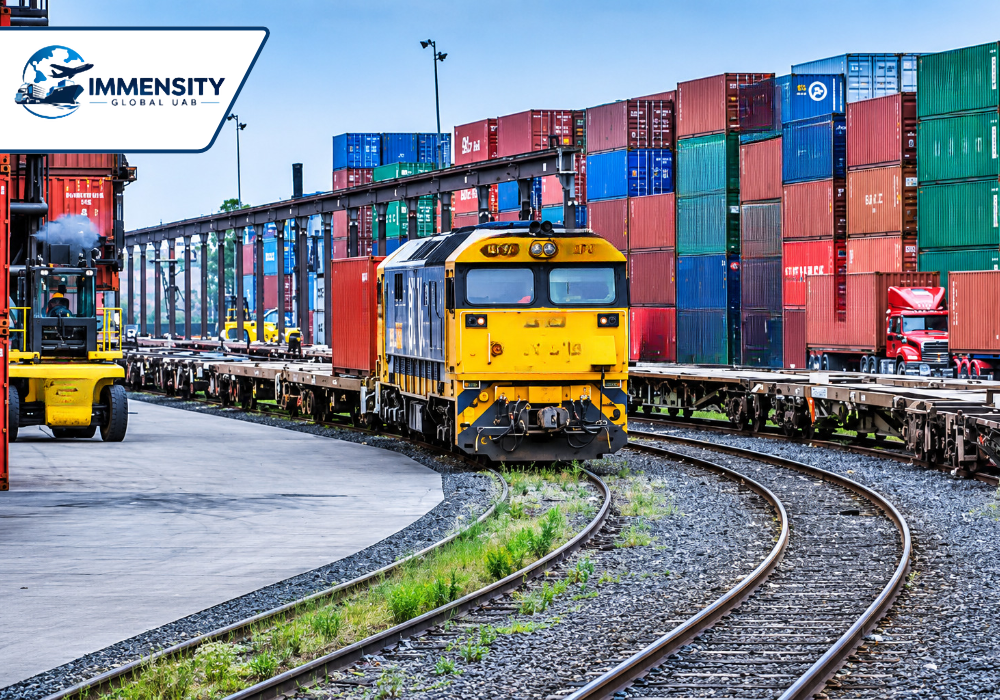
Moving goods across European countries requires careful planning, suitable transport routes and reliable delivery schedules. For importers, exporters and manufacturers, road transport may not always be the most practical option, especially when shipments involve long distances or large cargo volumes.
This is where European rail freight services can offer an effective alternative. Rail freight helps businesses move goods between major European markets through established railway networks. It can also support cost planning, reduce dependence on road transport and improve supply chain flexibility.
Whether you ship industrial materials, machinery, retail products or containerised cargo, understanding how rail freight works can help you make better transport decisions. This guide explains the benefits, costs, routes and important considerations when choosing rail freight for your European shipments.
What Are European Rail Freight Services?
European rail freight services involve transporting commercial goods by train between cities, countries, ports and industrial centres. Businesses use freight trains to move containers, raw materials, machinery and other cargo over medium and long distances.
Unlike passenger trains, freight trains carry commercial shipments using specialised wagons and container equipment.
Rail freight can operate as a standalone transport solution or as part of a multimodal supply chain. For example, a container may arrive at a European seaport by ship, travel inland by train and reach its final destination through road transport.
How Do Rail Freight Transport Services Work?
Rail freight transport services involve several stages, from shipment planning to final delivery.
- Booking and planning: The shipper provides cargo details, collection and delivery locations, weight and required delivery dates.
- Cargo collection: Goods are collected from the supplier or delivered to a suitable rail terminal.
- Loading: Containers or other suitable cargo are loaded onto freight wagons.
- Rail transportation: The train moves the shipment along the planned railway route.
- Terminal handling: Cargo is unloaded at the destination terminal.
- Final delivery: Road transport can move the goods from the terminal to the warehouse, factory or customer.
The exact process depends on the route, cargo type, terminal facilities and service arrangement.
When Should Businesses Use Rail Freight Transport Services?
Rail freight is not suitable for every shipment. However, it can be a practical choice when businesses need to move larger cargo volumes over longer distances.
Here are some situations where rail freight can be useful.
1. Long-Distance European Shipments
Businesses moving goods between distant European markets may benefit from rail connections.
Rail can provide an alternative to long road journeys, particularly where suitable freight corridors and terminal connections exist.
2. Large and Heavy Cargo
Manufacturers and industrial businesses often transport machinery, components, construction materials and other heavy products.
Rail freight can accommodate suitable high-volume cargo, subject to wagon capacity, loading limits and route restrictions.
3. Regular Business Shipments
Companies that move goods regularly between the same locations can consider scheduled rail services.
Consistent shipment volumes make it easier to plan transport requirements and coordinate warehouse operations.
4. Containerised Cargo
Importers and exporters frequently use containers to move goods between ports, terminals and distribution centres.
Rail transport can connect major seaports with inland logistics hubs, making it useful for businesses handling international shipments.
5. More Sustainable Transport Planning
Rail freight can produce lower greenhouse gas emissions per tonne-kilometre than road freight in many circumstances.
The actual environmental impact depends on the electricity or fuel used, train loading, route and first- and last-mile transport. Businesses should consider the complete journey when comparing transport options.
Key Benefits of European Rail Freight Services
Choosing the right transport method can affect delivery schedules, operating expenses and supply chain performance.
Here are some important benefits of using rail freight.
Cost Efficiency for Suitable Cargo Volumes
Rail freight can offer competitive transport costs when businesses move larger quantities over suitable distances.
It may also help reduce dependence on multiple long-distance road journeys. However, terminal handling and connecting road transport should be included when calculating the total cost.
Reduced Road Transport Dependence
European road networks can experience congestion, roadworks and traffic restrictions.
Rail freight provides another transport option and can help businesses diversify their supply chains.
Lower Environmental Impact
Rail transport is often more energy-efficient than road transport for moving large cargo volumes.
For businesses working towards environmental targets, rail can support lower-emission freight planning. The final emissions depend on the specific route and transport combination.
Suitable for Containerised Shipments
Containers make it easier to transfer cargo between different transport modes.
A business can combine sea, rail and road freight without unloading the goods from the container at every stage. This can simplify cargo handling and support efficient distribution.
Better Planning for Regular Shipments
Scheduled rail services can help businesses organise recurring shipments.
Manufacturers and wholesalers can coordinate production, stock availability and warehouse receiving around planned train departures and arrivals.
Important European Rail Freight Routes and Hubs
Europe has an extensive railway network connecting industrial centres, seaports and inland distribution terminals. These connections support domestic and international cargo movements.
The EU’s Trans-European Transport Network (TEN-T) provides a framework for developing connected transport infrastructure across countries and transport modes.
1. Rotterdam, Netherlands
The Port of Rotterdam is an important gateway for international cargo. Rail connections help move containers from the port to inland terminals and industrial areas across Europe.
2. Hamburg, Germany
The Port of Hamburg connects maritime shipping with inland rail and road networks. It supports the movement of containers to destinations in Germany and other European markets.
3. Antwerp, Belgium
The Port of Antwerp provides access to European industrial and distribution centres. Rail transport can support onward movement from the port to inland destinations.
4. Klaipėda, Lithuania
The Port of Klaipėda is an important Baltic transport gateway. Its location makes it relevant to cargo movements involving Lithuania and neighbouring Baltic and Eastern European markets.
Baltic and Eastern European Rail Corridors
The North Sea–Baltic European Transport Corridor connects the Netherlands, Belgium, Germany, Poland, Lithuania, Latvia and Estonia, among other countries.
This makes it relevant to businesses planning freight movements between Western Europe and the Baltic region. However, actual journey options depend on available rail services, terminal capacity, infrastructure compatibility and current operating conditions.
Rail Freight vs Road Freight vs Sea Freight
Each transport method has a different role in European supply chains. Comparing them can help businesses select the most suitable option.
| Factor | Rail Freight | Road Freight | Sea Freight |
|---|---|---|---|
| Best use | Medium and long-distance cargo | Flexible regional and cross-border delivery | Large international shipments |
| Speed | Depends on route and schedule | Flexible for direct deliveries | Usually slower |
| Cargo capacity | Suitable for large volumes | Depends on vehicle and trailer | Suitable for very large volumes |
| Flexibility | Depends on terminals and rail routes | High | Depends on ports and sailing schedules |
| Environmental impact | Often lower per tonne-km | Generally higher per tonne-km | Varies by vessel and route |
Which should you choose?
- Choose rail for suitable high-volume shipments travelling between connected terminals.
- Choose road for flexible collection and direct delivery.
- Choose sea for large international shipments where transit time allows.
Many businesses combine these options to create an efficient multimodal transport plan.
What Affects European Rail Freight Costs?
Rail freight prices depend on several factors. Businesses should consider the complete transport journey rather than focusing only on the train charge.
1. Distance and Route
Longer journeys may involve higher transport charges. However, the final price also depends on route availability, infrastructure fees and the countries involved.
2. Cargo Weight and Volume
The shipment’s weight, dimensions and loading requirements can affect the price.
Heavy or oversized goods may require specialised wagons and additional handling arrangements.
3. Terminal Handling
Loading, unloading, storage and container transfers can add to the overall cost.
Businesses should check whether terminal charges are included in the quotation.
4. First-Mile and Last-Mile Delivery
Rail terminals are not always located near suppliers or final customers.
Road collection and delivery may therefore be necessary. These costs should be included when comparing rail with direct road transport.
5. Delivery Schedule
Urgent shipments may require a different transport arrangement. Available train capacity, departure frequency and seasonal demand can also influence pricing.
6. Additional Services
Cargo insurance, specialised equipment, warehousing and documentation support may affect the total logistics budget.
Request an itemised quotation to understand the full cost before confirming a shipment.
How to Choose a Rail Freight Solutions Company
Selecting the right rail freight solutions company can make a significant difference to your supply chain.
A provider should understand your cargo, destination, delivery schedule and requirements for connecting transport.
Consider these factors before making a decision.
Check European Network Knowledge
Ask whether the provider understands the countries, terminals and railway connections involved in your shipment.
This is especially important when moving goods across the Baltic region, Central Europe and other international corridors.
Review Multimodal Capabilities
Rail freight often requires road transport at the beginning or end of a journey.
Choose a provider that can coordinate container haulage, road freight, warehousing and distribution where required.
Confirm Cargo Handling Capabilities
Check whether the provider can arrange suitable equipment for your shipment.
This is important for heavy machinery, industrial materials, refrigerated goods and oversized cargo.
Ask About Tracking and Communication
Shipment visibility helps businesses plan inventory and customer deliveries.
Ask how updates are provided, who handles delays and whether customer support is available outside standard working hours.
Compare Pricing and Service Terms
Do not compare quotations based on price alone.
Check transit estimates, handling charges, insurance arrangements, additional fees and delivery responsibilities.
European Cross-Border Rail Freight: Customs and Regulations
Cross-border rail freight requires more than selecting a railway route. Businesses must also understand customs procedures, documentation and transport regulations.
Rail Freight Within the European Union
Goods moving between EU Member States that are in free circulation generally do not require customs declarations at internal EU borders.
However, businesses must still meet applicable requirements for VAT, product safety, transport documentation and controlled goods. Certain products may also require additional certificates or inspections.
Rail Freight Between the UK and EU
After Brexit, shipments between Great Britain and EU countries are subject to customs formalities.
Depending on the shipment, businesses may need:
- Import and export customs declarations.
- Commercial invoices and packing lists.
- Commodity codes and origin information.
- EORI registration.
- Applicable licences and certificates.
- Security and safety information.
The EU-UK Trade and Cooperation Agreement provides preferential zero-tariff treatment for qualifying goods that meet the relevant rules of origin. However, customs procedures still apply.
Businesses should confirm all requirements before dispatch to avoid unnecessary border delays.
EU Rail Freight Safety and Technical Requirements
Rail freight operators must comply with applicable European and national railway safety and technical rules.
These requirements cover areas such as railway operations, infrastructure access, train compatibility and safety management. Cargo owners should also provide accurate information about goods, dimensions and handling requirements.
Common Rail Freight Mistakes Businesses Should Avoid
Even a suitable railway route can create problems if the shipment is not properly planned.
Here are some common mistakes to avoid:
- Ignoring terminal locations: A distant terminal can increase first-mile and last-mile transport costs.
- Providing incorrect cargo details: Incorrect weight or dimensions can cause loading problems.
- Overlooking customs paperwork: Missing documents can delay UK-EU shipments.
- Expecting fixed delivery times: Rail schedules can change because of maintenance, congestion or operational disruptions.
- Ignoring connecting transport: Rail terminals may require additional road transport for final delivery.
- Booking too late: Limited train capacity during busy periods can affect availability.
- Not checking insurance: Businesses should understand what cargo protection is included and what additional cover may be needed.
Plan for European Peak Shipping Seasons
Rail freight demand can change throughout the year.
For example, retail shipments may increase before Christmas, while agricultural products and industrial materials can follow seasonal demand patterns.
Businesses should discuss expected volumes early, confirm available capacity and allow enough time for terminal handling and final delivery.
How to Choose a European Logistics Company for Rail Freight
Selecting a suitable European logistics company is important for businesses that need coordinated freight movements across different countries.
A good provider should understand local transport networks, international shipping requirements and the needs of different industries.
When comparing providers, look for a transportation company in Europe that can coordinate rail freight with road transport, container haulage and warehousing. This can reduce communication gaps and make shipment planning easier.
Businesses should also check whether the provider offers global logistics services for shipments involving European ports, international suppliers and overseas customers.
For companies looking for a logistics company in Europe, important factors include transparent pricing, shipment visibility, transport flexibility and accessible customer support.
How Immensity Global Supports European Rail Freight Services
Immensity Global is an international logistics company headquartered in Vilnius, Lithuania. Operating since 2022, the company supports businesses with freight and transportation requirements across European markets.
Its services cover different stages of the supply chain, helping customers organise cargo movements according to their business needs.
Integrated Transportation Services
Immensity Global offers a range of logistics services, including:
- Air freight and sea freight.
- Road freight and rail freight.
- Warehousing and distribution.
- Container haulage and drayage services.
- Heavy haulage and open deck transport.
- Curtainsider, tanker and step frame transport.
- Refrigerated transport.
- Forklift services.
This range allows businesses to discuss different transport options and coordinate suitable solutions for their cargo.
Transparent Pricing
Clear quotations help businesses understand their transport expenses. Immensity Global focuses on transparent pricing to support better logistics budgeting.
On-Time Delivery and Real-Time Tracking
Shipment visibility helps businesses plan inventory, warehouse operations and customer deliveries. Real-time tracking provides updates on cargo movements.
24/7 Online Support
International freight movements can involve different time zones and operating schedules. Online support helps customers access assistance when they need shipment information.
Cost Optimisation and Cargo Insurance
Selecting suitable routes and transport methods can help businesses manage logistics expenses. Cargo insurance options can also provide protection against covered risks during transportation, subject to policy terms and conditions.
Whether you need rail freight, road transport, container haulage or warehousing, Immensity Global aims to make freight coordination simpler for European businesses.
Frequently Asked Questions
1. What are European rail freight services?
European rail freight services involve transporting commercial goods by train between European countries, ports, industrial centres and distribution terminals. They can carry containers, machinery, raw materials and other suitable cargo.
2. Is rail freight cheaper than road freight in Europe?
Rail freight can be cost-effective for larger shipments travelling longer distances. However, the total cost depends on route availability, terminal handling, cargo volume and connecting road transport.
3. What goods can be transported by rail freight?
Rail freight can carry containers, industrial equipment, construction materials, machinery, consumer goods and various other products. Specialised wagons may be required for certain cargo types.
4. Does rail freight require customs clearance in Europe?
Shipments between EU Member States involving goods in free circulation generally do not require internal customs declarations. However, shipments between Great Britain and the EU require customs formalities, and special rules may apply to certain goods.
5. How can businesses choose a rail freight provider?
Compare network knowledge, transport connections, cargo handling capabilities, tracking services, pricing and customer support. Also, check whether the provider can arrange road transport and warehousing when required.
Conclusion: Choose the Right European Rail Freight Solution
Rail freight can help businesses move larger cargo volumes across European markets while supporting cost optimisation and more sustainable transport planning.
However, successful shipments require careful route selection, suitable terminals, accurate documentation and well-organised first-mile and last-mile delivery.
Working with an experienced logistics partner can make these arrangements easier. Immensity Global offers rail freight alongside road, sea and air freight, warehousing and specialised transport services.
If your business needs to move cargo across Europe, explore the available transport options and find a solution that matches your shipment requirements.
Get a free freight quote from Immensity Global and discuss your European freight requirements.