
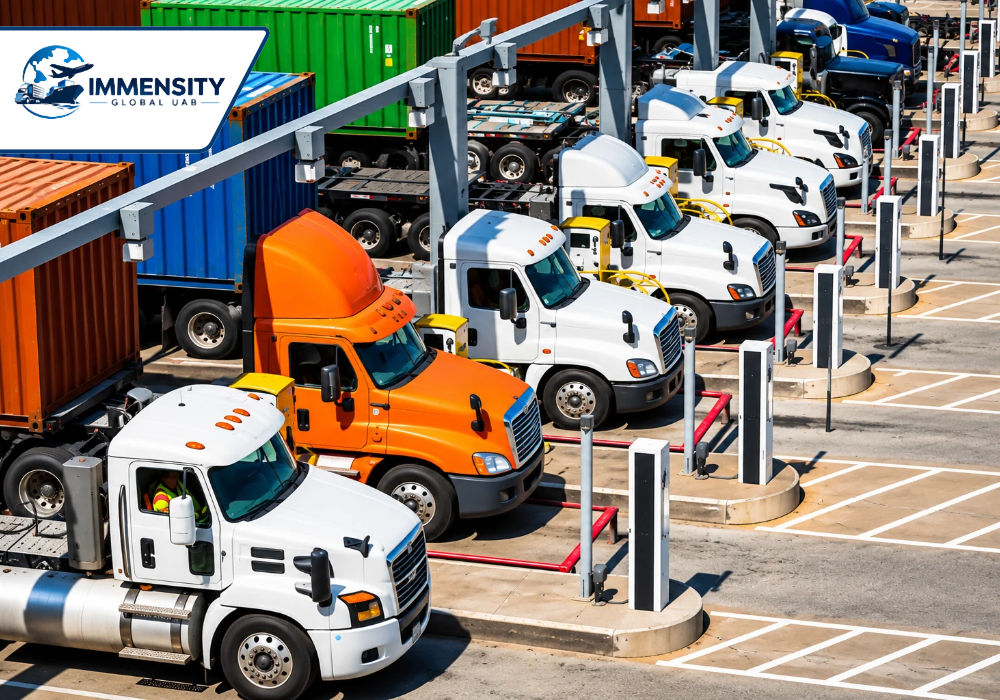
What Do Road Freight Logistics Services Include?
Road freight logistics services cover the planning, coordination, transportation, and delivery of commercial goods by road. They connect manufacturers, suppliers, warehouses, retailers, and customers through organised transport networks.
A complete service may involve several activities:
-
Shipment planning: Reviewing cargo details, pickup locations, delivery addresses, and deadlines.
-
Vehicle selection: Matching the shipment with a suitable truck, trailer, or transport arrangement.
-
Route coordination: Selecting practical routes based on distance, road conditions, and delivery requirements.
-
Cargo handling: Coordinating loading, unloading, and suitable cargo protection.
-
Documentation: Preparing or coordinating relevant transport and customs documents.
-
Shipment monitoring: Sharing progress updates and delivery information.
These activities help businesses manage transportation without handling every operational stage independently.
For example, a manufacturer shipping machinery from Germany to Poland needs suitable vehicle capacity, a planned route, accurate cargo information, and coordination between collection and delivery teams.
A professional transport provider brings these requirements together. As a result, businesses can organise regular shipments and manage changing cargo volumes more effectively.
Which Types of Road Freight Transport Services Are Available?
Road freight transport services include Full Truckload (FTL), Less Than Truckload (LTL), groupage, and specialised transportation. Each option serves different cargo volumes and delivery requirements.
1. Full Truckload (FTL) Transportation
FTL transportation uses a dedicated truck or trailer for one shipment. It is suitable for businesses moving large cargo volumes or requiring dedicated vehicle capacity.
For example, manufacturers shipping machinery, furniture, or large quantities of packaged products may prefer FTL transportation.
Its main features include:
-
Dedicated vehicle capacity.
-
Direct transportation between locations.
-
Fewer cargo handling stages.
-
Greater control over loading arrangements.
-
Suitable options for regular commercial shipments.
2. Less Than Truckload (LTL) Transportation
LTL transportation allows businesses to share available truck space with other compatible shipments. It is useful when a company does not have enough cargo to fill an entire trailer.
For instance, a retailer shipping several pallets from the Netherlands to Belgium may use LTL instead of booking a dedicated truck.
This arrangement can help businesses manage smaller shipments. However, delivery schedules may depend on consolidation points, other collections, and distribution arrangements.
3. Groupage Freight Services
Groupage combines smaller shipments from different customers into one transport movement. Each customer pays for the space their goods occupy rather than booking the entire vehicle.
Groupage can suit wholesalers, small manufacturers, and businesses with regular pallet shipments.
However, companies should consider consolidation schedules and additional handling when estimating delivery times.
4. Specialised Road Transportation
Some goods need specific vehicles or handling arrangements. Specialised transportation matches equipment with the cargo’s weight, dimensions, temperature, or other requirements.
Examples include:
-
Refrigerated transportation for temperature-sensitive products.
-
Flatbed transportation for machinery and construction materials.
-
Heavy haulage for oversized industrial equipment.
-
Container haulage for shipping containers.
-
Curtainsider transportation for suitable palletised goods.
The correct option depends on cargo specifications, vehicle availability, and applicable transport regulations.
How Do Road Freight Shipping Services Work Across European Borders?
Road freight shipping services move commercial goods between countries through coordinated collection, documentation, transportation, and delivery activities. International shipments require additional planning because different countries may have different transport and customs requirements.
A typical cross-border shipment follows these stages.
1. Shipment information and verification
The shipper provides cargo descriptions, dimensions, weight, packaging details, pickup information, and delivery requirements. Accurate information helps the transport provider select suitable equipment.
2. Route and carrier coordination
The logistics team identifies suitable transport options and plans the journey. Route selection considers distance, road restrictions, border procedures, tolls, and expected delivery schedules.
3. Transport documentation
International road shipments commonly use a CMR consignment note when the CMR Convention applies. Commercial invoices, packing lists, customs declarations, and transit documents may also be required depending on the shipment.
4. Border and customs procedures
Shipments moving between EU member states generally benefit from the EU single market. However, movements involving non-EU countries can require export, import, or transit formalities.
Businesses should confirm the applicable requirements before dispatch.
5. Delivery and confirmation
After transportation, the receiving party checks the goods and confirms delivery. The logistics provider can share available delivery updates and relevant shipment records.
Good coordination between the shipper, carrier, and receiver helps reduce documentation errors and avoidable delays.
Why Is Road Freight Important for European Supply Chains?
Road freight is important because it connects production facilities, distribution centres, warehouses, ports, and customers through flexible transport networks.
Eurostat reported that the European Union recorded 1,886 billion tonne-kilometres of road freight transport in 2025, an increase of 0.9% compared with 2024. This shows the continued role of road transport in European commercial activity.
Eurostat+1
Businesses use road transportation for several reasons.
Access to business locations: Trucks can reach many factories, warehouses, retail premises, and distribution centres without requiring direct access to a railway terminal or seaport.
Flexible shipment sizes: FTL and LTL arrangements support both large consignments and smaller pallet shipments.
Regional distribution: Businesses can coordinate regular deliveries between nearby European markets.
Production support: Manufacturers can arrange transportation of raw materials, components, and finished products according to operational requirements.
Multimodal connections: Road vehicles connect with airports, seaports, and railway terminals to support wider international logistics services.
For these reasons, road freight remains an important part of supply chain planning.
How Should Businesses Compare Different Freight Options?
Businesses should compare freight options according to cargo volume, delivery requirements, handling needs, and transportation costs. The cheapest option may not always provide the best overall value.
The following table highlights the main differences.
| Freight option | Best suited for | Main consideration |
|---|---|---|
| FTL | Large shipments | Dedicated vehicle capacity |
| LTL | Smaller shipments | Shared transport space |
| Groupage | Multiple small consignments | Consolidation schedules |
| Refrigerated transport | Temperature-sensitive goods | Temperature requirements |
| Flatbed transport | Machinery and oversized cargo | Loading and securing arrangements |
| Heavy haulage | Heavy or oversized equipment | Permits and route restrictions |
Businesses should also compare delivery schedules, vehicle suitability, cargo protection, and additional charges.
For example, a company transporting several pallets may find LTL more suitable than FTL. In contrast, a manufacturer moving a complete production line may need dedicated or specialised transportation.
A detailed shipment assessment helps identify the right arrangement before booking.
What Should You Check When Choosing a Logistics Company in Europe?
A suitable logistics company in Europe should understand your cargo requirements, provide clear transportation arrangements, and explain its responsibilities throughout the shipment process.
Before choosing a provider, consider these important factors.
Geographic Coverage
Check whether the provider can coordinate transportation between your required collection and delivery locations. International shipments may require additional carrier partnerships and border coordination.
Transport Options
Ask whether the provider can arrange FTL, LTL, groupage, and specialised vehicle requirements. A wider selection can help accommodate changing shipment volumes.
Shipment Visibility
Ask how the provider shares shipment updates. Tracking information and regular communication can help your team prepare for incoming deliveries.
Documentation Support
International shipments require accurate transport and customs documentation. Confirm who prepares, checks, and submits the necessary paperwork.
Pricing Transparency
Request a detailed quotation that explains transportation charges and possible additional costs. These may include tolls, fuel adjustments, waiting time, extra handling, and special equipment.
Communication and Coordination
Choose a provider that explains its processes and provides a clear contact point for shipment questions.
Experience With Your Cargo
Different products require different transport arrangements. Ask whether the provider can coordinate the equipment and handling requirements relevant to your industry.
These checks can help businesses compare global logistics companies based on operational suitability rather than price alone.
How Does Immensity Global Coordinate Road Freight Logistics?
Immensity Global coordinates road freight shipments through shipment assessment, route planning, transport partner coordination, documentation support, and delivery communication.
Its published road freight services cover several business transportation requirements, including:
-
Full Truckload (FTL) transportation.
-
Less Than Truckload (LTL) arrangements.
-
Cross-border transportation.
-
Shipment tracking and updates.
-
Secure cargo handling.
-
Route and delivery coordination.
The company reviews shipment details before identifying suitable transportation arrangements. This includes cargo type, dimensions, weight, collection address, destination, and preferred delivery schedule.
In addition, its wider logistics services include air freight, sea freight, warehousing, forklift services, and drayage.
This range of services gives businesses access to different transportation options according to their supply chain requirements.
For shipments involving multiple transport modes, businesses can also consider sea freight services alongside road transportation.
Companies should discuss route availability, cargo handling, delivery schedules, and applicable service terms before confirming a booking.
How Can Businesses Prepare for a Road Freight Shipment?
Businesses can prepare for road freight shipments by organising cargo information, confirming delivery requirements, and checking the necessary documents before collection.
Use this practical preparation checklist:
-
Confirm cargo details: Record the product description, quantity, dimensions, and total weight.
-
Check packaging: Use suitable packaging and secure the goods for transportation.
-
Confirm addresses: Provide accurate collection and delivery locations.
-
Choose the transport option: Decide whether FTL, LTL, groupage, or specialised transportation is appropriate.
-
Prepare documentation: Check invoices, consignment notes, and applicable customs documents.
-
Confirm delivery schedules: Discuss collection dates, estimated transit times, and delivery arrangements.
-
Review additional requirements: Identify vehicle restrictions, temperature controls, permits, or special handling needs.
Good preparation allows the logistics provider to assess the shipment accurately. It can also help prevent incorrect vehicle allocation, documentation problems, and unexpected charges.
For recurring shipments, businesses should maintain consistent cargo records and share updated information whenever shipment requirements change.
Frequently Asked Questions
1. What are road freight logistics services?
Road freight logistics services involve organising and transporting commercial goods using trucks, trailers, and other road vehicles. These services include shipment planning, vehicle coordination, route selection, documentation, and delivery management. Businesses use them for domestic distribution, regional transportation, and international cargo movements across European markets.
2. What is the difference between FTL and LTL transportation?
Full Truckload (FTL) uses a dedicated vehicle for one shipment, while Less Than Truckload (LTL) allows businesses to share vehicle space with other compatible shipments. FTL generally suits larger consignments, whereas LTL can suit smaller cargo volumes that do not require an entire trailer.
3. Which goods can be transported through road freight?
Road freight can transport many commercial products, including packaged goods, pallets, machinery, furniture, industrial materials, and construction supplies. Specialised vehicles can also carry temperature-sensitive or oversized cargo. However, businesses must check vehicle capacity, cargo restrictions, handling requirements, and applicable regulations before arranging transportation.
4. Do international road freight shipments require customs documentation?
Customs documentation depends on the shipment route and the countries involved. Movements between EU member states generally do not require customs declarations for goods in free circulation. However, shipments involving non-EU countries may require export, import, or transit documents alongside relevant transport paperwork.
5. How can I request road freight shipping services from Immensity Global?
Visit the Immensity Global website and submit your transportation requirements through its contact or quotation facility. Share your cargo type, weight, dimensions, pickup location, delivery destination, and preferred schedule. The team can review these details and discuss suitable transport arrangements for your shipment.
How Can the Right Road Freight Partner Support Your Business?
Choosing suitable road freight logistics services can help businesses coordinate cargo movement, manage delivery schedules, and maintain organised supply chain operations.
The right transport arrangement depends on shipment volume, destination, cargo specifications, and delivery requirements. Therefore, businesses should compare FTL, LTL, groupage, and specialised transportation before making a decision.
Working with an experienced transportation company in Europe can also simplify cross-border coordination and communication.
Need road freight transportation support across Europe? Contact Immensity Global to discuss your cargo requirements and request a suitable road freight quotation.