
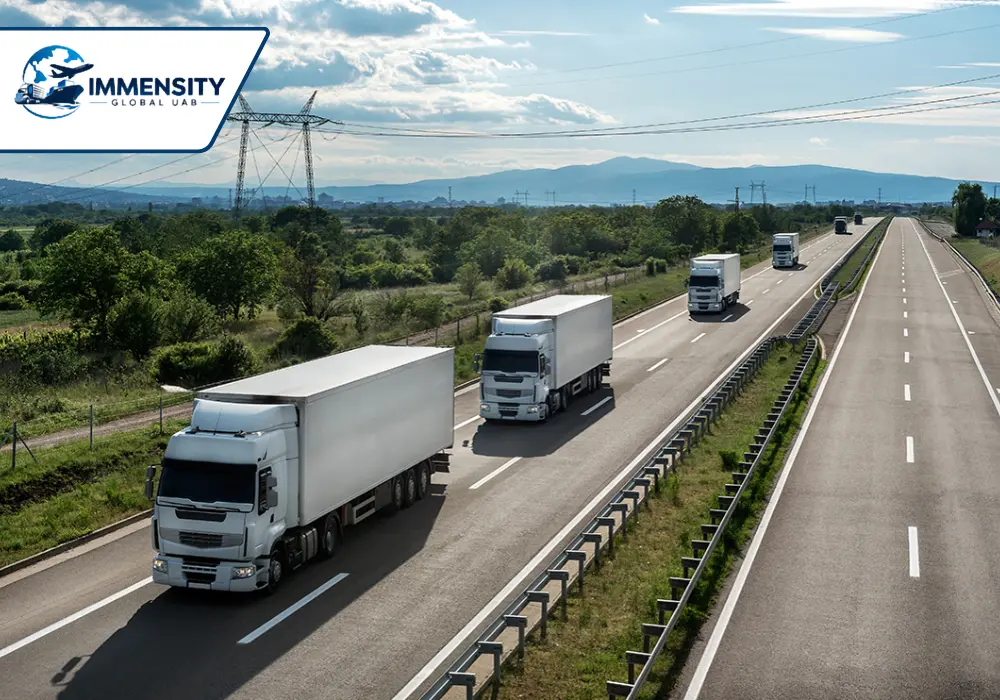
Road freight transport services help businesses move goods quickly, securely, and directly between suppliers, warehouses, and customers. In 2024, road transport accounted for 25.7% of freight transport performance within the European Union, according to Eurostat. Its flexible routes, door-to-door delivery options, and adaptable shipment sizes make it a practical choice for many supply chains.
What Are Road Freight Transport Services?
Road freight transport services involve moving goods by trucks, vans, and trailers between local, national, and international destinations. Businesses use these services to transport raw materials, finished products, equipment, and commercial shipments.
Road transport supports different shipment requirements. For example, companies can book a full truckload (FTL) for larger shipments or less-than-truckload (LTL) services when their goods do not require an entire vehicle.
Furthermore, road freight connects factories, distribution centres, warehouses, ports, and retail locations. This makes it an important part of regional distribution and international supply chains.
According to Eurostat’s road freight statistics, EU road freight transport reached 1,869 billion tonne-kilometres in 2024, an increase of 0.6% compared with 2023. This figure highlights the continued role of road transport in moving commercial goods.
Why Are Road Freight Transport Services Important for Fast Delivery?
Road freight supports faster delivery by offering flexible collection times, direct routes, and convenient access to delivery locations. Businesses can plan transportation around production schedules, customer orders, and stock requirements.
Here are the main advantages.
1. Direct Door-to-Door Delivery
Road transport can move goods directly from a collection point to the delivery address. Unlike transport options that depend on ports or rail terminals, trucks can reach many factories, shops, warehouses, and business premises.
As a result, businesses may need fewer transfers between transport modes. Fewer handling stages can also reduce the risk of damage and delays.
2. Flexible Route Planning
Road networks allow transport planners to select routes based on distance, traffic, delivery windows, and road restrictions. If a route becomes unavailable, a suitable alternative may help keep the shipment moving.
However, traffic, weather, border checks, and driving-time rules can affect arrival times. Therefore, businesses should choose a transport partner that plans routes carefully and communicates possible delays.
3. Convenient Regional Deliveries
Road freight works well for short and medium-distance shipments across European markets. Businesses can schedule regular collections and deliveries to support manufacturing, retail distribution, and stock replenishment.
Moreover, flexible departure planning can help companies respond to changing order volumes. Delivery times still depend on distance, available capacity, and operating conditions.
How Does Cross-Border Road Freight Support European Trade?
Cross-border road freight helps businesses move goods between countries by coordinating transport routes, shipment documents, border requirements, and delivery schedules. It is particularly useful for companies that buy materials from overseas suppliers or sell products in several European markets.
International road shipments may involve different regulations, tolls, customs procedures, and documentation requirements. For shipments entering or leaving the European Union, customs formalities may apply. Requirements also depend on the countries involved and the goods being transported.
Effective cross-border planning includes:
- Document checks: Confirm that invoices, consignment notes, and other required documents are accurate.
- Route coordination: Select routes that suit the cargo, delivery deadline, and vehicle.
- Border preparation: Identify applicable customs and regulatory requirements before departure.
- Shipment updates: Keep relevant teams informed about collection, transit, and delivery progress.
For businesses expanding into new markets, an international logistics company can help coordinate these stages. Nevertheless, the exact responsibilities of the transport provider and the shipper should be agreed upon before dispatch.
What Makes Road Freight Shipping Services Secure?
Road freight shipping services can support cargo security through careful loading, shipment verification, tracking, and suitable transport arrangements. However, no transport method can eliminate every risk.
Businesses should assess the nature and value of their cargo before selecting a service. Fragile, high-value, temperature-sensitive, or regulated goods may require specific equipment and additional precautions.
Important security measures include:
- Cargo checks: Verify shipment details, packaging, labels, and quantities before collection.
- Suitable loading: Secure goods to reduce movement during transit.
- Shipment tracking: Use available tracking tools to monitor progress and identify unexpected delays.
- Clear documentation: Maintain accurate shipment records and delivery confirmation.
- Insurance review: Check available cargo insurance options, policy limits, exclusions, and claim requirements.
Immensity Global lists real-time tracking, secure cargo handling, and cargo insurance options among the features of its road freight offering. Customers should confirm the coverage, availability, and terms that apply to their individual shipment.
Can Road Freight Logistics Services Reduce Transportation Costs?
Road freight logistics services can help control transportation costs through suitable vehicle selection, shipment consolidation, efficient route planning, and fewer unnecessary handling stages. The most economical option depends on cargo volume, distance, delivery urgency, and special handling needs.
For example, a business shipping several pallets may not need a dedicated truck. An LTL service can combine compatible shipments from different customers, allowing each business to pay for the capacity it uses.
In contrast, FTL transport may suit large consignments that fill a vehicle or require dedicated space. It can also reduce handling when the shipment travels directly from collection to delivery.
Businesses can manage costs by:
- Comparing FTL and LTL options.
- Providing accurate cargo dimensions and weights.
- Planning regular shipments where possible.
- Checking whether fuel surcharges, tolls, waiting time, or extra handling fees apply.
- Choosing delivery schedules that balance urgency and price.
However, the lowest initial quote is not always the best value. Companies should also consider transit time, cargo protection, communication, and the potential cost of a delayed delivery.
How Do Road Freight Services Compare With Other Transport Modes?
Road freight offers flexible access to delivery locations, while air, sea, and rail freight serve different shipping needs. The right option depends on the shipment’s distance, urgency, size, budget, and destination.
| Factor | Road freight | Air freight | Sea freight | Rail freight |
|---|---|---|---|---|
| Delivery speed | Often suitable for regional and cross-border deliveries | Often suitable for urgent, long-distance shipments | Usually slower for long-distance international cargo | Often suitable for planned long-distance land routes |
| Cost considerations | Practical for many short and medium-distance shipments | Higher cost may apply to urgent cargo | Often economical for large international volumes | Depends on route, terminals, and handling |
| Delivery access | Direct road access to many business locations | Requires airport connections and onward transport | Requires port access and often onward transport | Depends on rail terminals and last-mile connections |
| Shipment flexibility | FTL, LTL, and various vehicle types | Best assessed against weight, size, and urgency | Well suited to containerised and bulk cargo | Useful for suitable inland and intermodal cargo |
| Common consideration | Traffic and road restrictions | Capacity and airport handling | Sailing schedules and port handling | Network availability and terminal transfers |
These are general comparisons, not fixed rules. Actual performance and cost depend on the route and service arrangement.
For businesses that need alternatives, air freight services may suit time-sensitive international cargo. Meanwhile, sea freight services can suit large shipments where transit time is less critical. Rail freight transportation is another option for suitable routes and cargo types.
Which Businesses Benefit Most From Road Freight Transport?
Road freight can support manufacturers, wholesalers, retailers, distributors, and many other businesses that need regular or occasional cargo movement.
Manufacturing: Factories use road transport to move components, raw materials, and finished products between suppliers, production facilities, and customers.
Retail and e-commerce: Retailers can arrange stock transfers and deliveries to distribution centres or stores. Flexible shipment sizes can help businesses respond to changing demand.
Food and beverage: Suitable vehicles, handling procedures, and temperature controls can support shipments that require specific conditions. Businesses should confirm that the selected equipment meets their cargo requirements.
Construction: Road transport can move building materials, tools, and equipment to warehouses or project sites, subject to vehicle access and load restrictions.
Wholesale distribution: Wholesalers can use FTL or LTL services to supply multiple business customers and manage regular deliveries.
A logistics company in Europe can help businesses select transportation arrangements based on their cargo, route, volume, and delivery schedule. The appropriate service should reflect the shipment’s actual needs rather than relying on a single transport option for every order.
How Should You Choose a European Road Freight Partner?
Choose a European logistics company that can explain its transport options, security procedures, tracking arrangements, pricing, and cross-border support. A clear service agreement helps businesses understand what to expect before their cargo leaves the warehouse.
Use this checklist when comparing providers:
- Service coverage: Confirm that the provider serves your collection and delivery locations.
- Shipment options: Ask whether FTL, LTL, and any required specialist transport are available.
- Delivery planning: Check how the provider estimates transit times and handles delays.
- Cargo security: Ask about loading procedures, tracking, insurance options, and incident reporting.
- Cross-border experience: Confirm who manages required documents and customs arrangements.
- Pricing transparency: Request a breakdown of transport charges and possible additional fees.
- Communication: Establish how often updates are provided and whom to contact if an issue arises.
Also, share accurate shipment details when requesting a quote. Include the cargo type, weight, dimensions, collection address, delivery address, preferred date, and any special handling needs.
A global logistics company may be useful when your supply chain involves several countries or multiple transport modes. In that case, ask how the provider coordinates international connections and which services it manages directly.
How Does Immensity Global Support Road Freight Deliveries?
Immensity Global provides road transport solutions across Europe, including full truckload, less-than-truckload, and cross-border transportation. Its published service information also lists route planning, shipment verification, real-time tracking, and secure cargo handling.
The company describes a process that starts with a review of cargo requirements and delivery schedules. Its team then coordinates routes and transportation resources, checks shipment information, and manages delivery arrangements.
For businesses, this approach can help bring key transportation details into one coordinated process. Still, delivery dates and transit times depend on route conditions, capacity, border requirements, and other factors outside a provider’s direct control.
Businesses comparing road freight shipping services should discuss their specific routes and cargo requirements before booking. They should also confirm tracking availability, insurance terms, documentation responsibilities, and any additional charges.
Frequently Asked Questions
1. What are the main benefits of road freight transport services?
Road freight offers flexible routes, door-to-door delivery, adaptable shipment sizes, and convenient access to many business locations. It can support regional distribution and cross-border trade. Businesses can select FTL or LTL services according to their cargo volume, budget, delivery schedule, and handling requirements.
2. Is road freight suitable for cross-border deliveries in Europe?
Yes. Road freight can move commercial goods between many European countries. However, delivery planning must account for route restrictions, documentation, driving-time rules, and applicable customs procedures. Requirements differ depending on the countries involved, the shipment’s origin, and whether the goods enter or leave the European Union.
3. How can businesses improve road freight shipment security?
Businesses can improve shipment security by checking cargo details, using suitable packaging, securing loads, monitoring available tracking updates, and maintaining accurate documentation. They should also review insurance terms and incident procedures. The appropriate precautions depend on the cargo’s value, type, destination, and specific transport risks.
4. Is road freight cheaper than air freight?
Road freight is often a cost-effective option for short and medium-distance shipments, while air freight may suit urgent long-distance deliveries. However, the best choice depends on shipment weight, dimensions, route, timing, and handling costs. Businesses should compare complete quotes and delivery requirements before choosing a transport mode.
5. How do I request road freight shipping services from Immensity Global?
Visit the Immensity Global Road Freight page to review the service and contact the company. Prepare your cargo type, dimensions, weight, collection and delivery locations, and preferred delivery date. The team can assess these details and discuss suitable transport arrangements and pricing.
How Can the Right Road Freight Partner Improve Your Deliveries?
Road freight transport services give businesses a flexible way to move goods across local, regional, and international routes. With appropriate route planning, shipment monitoring, cargo protection, and clear communication, companies can manage deliveries more effectively.
The right solution depends on your shipment’s size, destination, urgency, and budget. Therefore, compare transport options carefully and confirm the service terms before booking.
Need road freight support across Europe? Contact Immensity Global to discuss your shipment requirements and request a tailored transportation quote.