
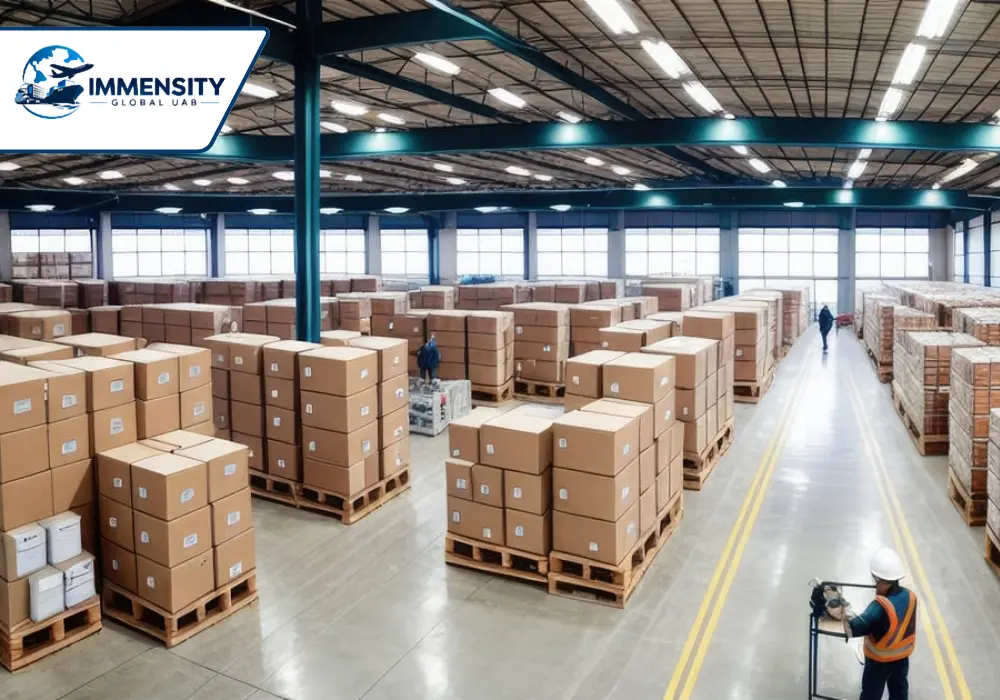
Third-party logistics (3PL) warehouse companies manage storage, inventory, order fulfilment and distribution for other businesses. They help companies store products, process orders and coordinate deliveries without operating every warehouse activity themselves. Eurostat reports that 24% of EU businesses conducted online sales in 2024, highlighting the importance of organised fulfilment and inventory management.
What Are 3PL Warehouse Companies in Europe?
3pl warehouse companies europe refers to third-party logistics providers that manage warehousing and related supply chain operations for other businesses. These providers can handle receiving, storage, inventory tracking, picking, packing and dispatch.
Instead of managing their own warehouse facilities, companies can outsource selected operations to a specialist provider. This arrangement allows businesses to focus on sales, customer service and product development while an external partner handles agreed logistics tasks.
For example, an online retailer may store its products in a third-party warehouse. When a customer places an order, warehouse staff pick and pack the product before arranging delivery.
However, each provider offers different services. Some focus on storage, while others combine warehousing with freight coordination and distribution. Businesses should review the service agreement before selecting a provider.
How Does a 3PL Warehouse Work?
A 3PL warehouse works by receiving goods, storing products, managing inventory and preparing shipments according to the customer’s requirements.
The process generally includes five stages.
1. Receiving and Checking Goods
First, products arrive from manufacturers, suppliers or transport companies. Warehouse staff check the delivery against shipping documents and record the received quantities.
They may also inspect packaging for visible damage. Accurate receiving records help prevent stock discrepancies and support better inventory control.
2. Storing Products Safely
Next, staff assign storage locations according to product type, dimensions and handling requirements. They organise products so workers can locate them when orders arrive.
Some warehouses use warehouse management systems (WMS) to record stock locations and quantities. However, available technology differs between providers.
3. Tracking Inventory
Inventory management records the movement of goods into and out of the warehouse. These records help businesses understand current stock levels and identify products that need replenishment.
Regular checks and timely updates are important. Therefore, companies should ask how frequently their warehouse partner provides inventory reports.
4. Picking, Packing and Dispatching
When an order arrives, warehouse staff select the required products, pack them and prepare shipping labels where applicable.
The provider then arranges collection or dispatch according to the agreed process. Accurate order handling can help reduce picking errors and shipping delays.
5. Coordinating Deliveries
Finally, the goods move to retailers, distributors or end customers. Depending on the contract, the provider may coordinate road, air or sea freight.
For international shipments, businesses should also confirm who handles customs documentation, duties and other applicable requirements.
What Services Do 3PL Warehouse Companies Provide?
3PL warehouse companies can provide storage, stock management, order fulfilment and transportation coordination. The exact services depend on the provider’s facilities, network and contract.
Common services include:
- Warehousing and storage: Keeping products in designated facilities until they are needed.
- Inventory management: Recording stock quantities, movements and discrepancies.
- Order fulfilment: Picking, packing and preparing customer orders.
- Distribution management: Coordinating the movement of products to their destinations.
- Freight coordination: Arranging transportation between suppliers, warehouses and customers.
- Cargo handling: Supporting the loading, unloading and movement of goods.
- Returns management: Receiving and recording returned products when included in the service agreement.
Businesses looking for international warehousing services should check the provider’s locations, storage capacity, handling procedures and reporting capabilities.
For example, a company importing products may need temporary storage before distributing goods to several markets. A suitable warehouse arrangement can help organise inventory and coordinate onward transportation.
However, businesses should not assume that every provider offers customs support, temperature-controlled storage or specialist cargo handling. These requirements need separate confirmation.
Why Is Warehouse Logistics in Europe Important for Businesses?
Warehouse logistics in Europe helps businesses coordinate storage, inventory and distribution across multiple markets. Effective warehouse operations can support product availability, order processing and transportation planning.
Several factors make warehouse management important.
Better Inventory Control
Accurate inventory records help businesses understand which products are available and when they need to reorder stock. They can also help identify damaged, missing or slow-moving items.
Consequently, companies can make purchasing decisions using more accurate stock information.
Flexible Storage Capacity
Businesses often experience changes in demand during seasonal peaks, promotional campaigns and market expansion.
An external warehouse provider may offer storage arrangements that match these changing needs. However, available space and flexibility depend on the provider’s capacity and contract terms.
More Organised Distribution
Warehousing connects incoming shipments with outgoing deliveries. Businesses can store products before sending them to retailers, distributors or customers.
In addition, a provider that coordinates storage and transportation may reduce the administrative effort involved in managing several logistics suppliers.
Support for International Trade
Companies shipping products across borders must coordinate inventory, transport schedules and documentation. A well-organised warehouse process helps keep these activities connected.
Nevertheless, businesses remain responsible for understanding their contractual obligations and applicable trade requirements.
What Is the Difference Between a 3PL Warehouse and an In-House Warehouse?
A 3PL warehouse is operated by an external logistics provider, while an in-house warehouse is managed directly by the business.
| Factor | 3PL warehouse | In-house warehouse |
|---|---|---|
| Operations | Managed by an external provider | Managed by the business |
| Initial investment | May reduce direct investment in facilities | May require spending on space, equipment and systems |
| Staffing | Generally managed by the provider | Managed by the business |
| Control | Shared according to the contract | Greater direct operational control |
| Capacity | Depends on provider availability | Depends on owned or leased space |
| Technology | Depends on the provider’s systems | Selected and managed internally |
| Suitable for | Businesses seeking outsourced logistics | Businesses needing direct control |
Neither option is best for every business. A company with predictable, high-volume operations may prefer an in-house facility. Another business may prefer outsourcing to avoid managing warehouse operations directly.
Companies should compare storage fees, labour, equipment, technology, insurance and transportation costs before making a decision.
How Do Global Logistics Services Connect Warehousing and Transportation?
Global logistics services connect warehousing with freight movement, shipment coordination and distribution across international supply chains.
For example, imported goods may arrive by sea, move into a warehouse for storage and later travel by road to a distributor. Each stage requires coordination between the parties responsible for handling the shipment.
The European Union’s freight statistics show the importance of these connections. In 2024, maritime transport accounted for 67.0% of EU freight transport performance, while road transport accounted for 25.7%. These figures measure tonne-kilometres rather than shipment counts.
Warehouse facilities can support this process by receiving cargo, recording inventory and preparing goods for onward transportation.
Businesses that require international warehousing services alongside freight coordination should confirm whether the provider manages both activities directly or works with separate partners.
They should also check customs responsibilities, delivery schedules and shipment tracking arrangements. Clear responsibilities help reduce confusion when goods move between countries.
How Can You Choose a European Logistics Company?
Choosing a suitable European logistics company requires comparing its warehouse capabilities, service coverage, pricing, reporting systems and transportation options.
Consider the following factors before signing an agreement.
1. Confirm Warehouse Coverage
Check the provider’s available warehouse locations and the destinations it can serve. If your business operates across several markets, ask how the provider coordinates storage and deliveries between those locations.
2. Review Product Handling Requirements
Different products need different storage conditions. Fragile items, oversized cargo and temperature-sensitive goods may require specialist facilities or equipment.
Confirm that the provider can meet your specific requirements before sending inventory.
3. Compare Pricing
Request a detailed quotation covering storage, receiving, picking, packing, handling and transportation.
Also ask about minimum monthly charges, additional fees and contract termination terms. Comparing the full cost helps businesses make better decisions.
4. Check Inventory Reporting
Ask how the provider records stock movements, reports discrepancies and conducts inventory checks.
If your business already uses inventory software, confirm whether the provider can exchange data with your system.
5. Evaluate Communication
Find out who handles shipment questions, stock discrepancies, damaged products and urgent requests.
A written agreement should explain reporting expectations, claims procedures and each party’s responsibilities.
How Can a Transportation Company in Europe Support Warehouse Operations?
A transportation company in Europe supports warehouse operations by moving goods between suppliers, ports, storage facilities, distribution centres and customers.
Transportation plays an important role before and after warehouse storage. For example, trucks may collect goods from a port and deliver them to a warehouse. Later, the same products may leave the warehouse for distribution to retailers.
Businesses can use road freight for regional deliveries and combine it with sea or air freight for international shipments, depending on cost, timing and cargo requirements.
When selecting a transport partner, companies should consider delivery coverage, cargo suitability, tracking options and scheduling requirements.
They should also confirm whether the transportation provider coordinates directly with the warehouse. Clear communication between both parties can help prevent missed collections and unnecessary delays.
How Can Immensity Global Support Your Warehousing and Freight Needs?
Immensity Global publishes warehousing and logistics services that businesses can review when assessing storage and freight coordination requirements.
Its website provides information about warehousing services, logistics services and drayage services.
Businesses should discuss their cargo type, storage volume, order frequency and delivery destinations before selecting services. They should also confirm pricing, availability, handling requirements and contractual responsibilities.
Companies seeking a logistics company in Europe can use these details to assess whether the available services match their supply chain needs.
Frequently Asked Questions
1. What does 3PL mean in warehousing?
3PL stands for third-party logistics. It means outsourcing logistics activities to an external provider. In warehousing, these activities may include receiving, storing, tracking, picking, packing and dispatching goods. The provider’s responsibilities depend on the services included in the agreement.
2. How much do 3PL warehouse services cost in Europe?
The cost depends on storage volume, product dimensions, handling requirements, order frequency and warehouse location. Providers may charge separate fees for storage, receiving, picking, packing and transportation. Businesses should request an itemised quotation based on their expected inventory levels and monthly order volumes.
3. Are 3PL warehouses suitable for small businesses?
Yes, 3PL warehouses can suit small businesses that need storage and order fulfilment without operating their own facilities. However, minimum fees, contract conditions and order requirements vary. Small businesses should compare total outsourcing costs with their current operating expenses before choosing a provider.
4. What is the difference between 3PL and 4PL logistics?
A 3PL provider generally performs logistics activities such as warehousing, transportation and order fulfilment. A fourth-party logistics provider, or 4PL, usually takes a broader role in coordinating several logistics providers and supply chain activities. The exact distinction depends on the provider’s responsibilities and contract.
5. How can I choose the right 3PL warehouse company?
Compare warehouse capacity, geographic coverage, inventory reporting, transportation options, pricing and customer support. Check whether the provider can handle your products and required delivery routes. Also review insurance arrangements, liability limits, claims procedures and contract terms before making a commitment.
Conclusion: Which 3PL Warehouse Company Is Right for Your Business?
Choosing the right warehouse partner depends on your inventory requirements, shipment volumes, distribution destinations and budget. A suitable provider can help coordinate storage, order fulfilment and transportation while reducing the need to manage every warehouse activity internally.
Compare service coverage, costs, reporting processes and contractual responsibilities before making a decision.
Need support with warehousing and freight coordination? Visit Immensity Global to review its services and discuss your logistics requirements.