
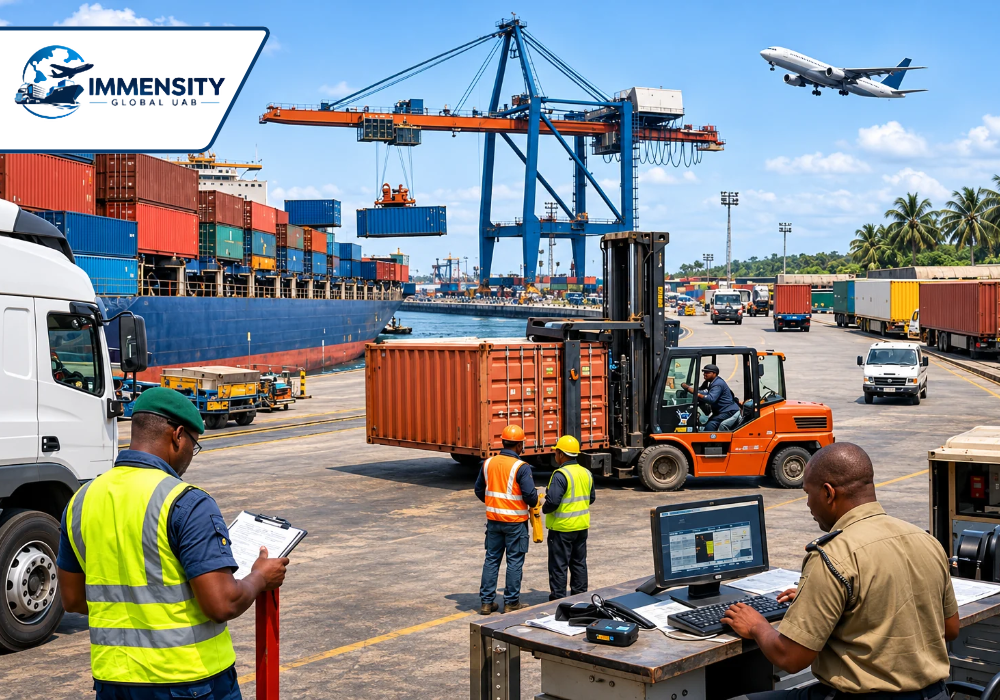
1. What Transportation Services Does Your Business Need?
The right transportation company should offer services that match your cargo type, shipment volume, and delivery schedule.
Before contacting providers, identify the transportation services your business needs. Different products require different handling methods. For example, machinery may need specialised equipment, while perishable goods require temperature-controlled transportation.
Consider these common freight services:
-
Road Freight: Suitable for domestic deliveries, cross-border shipments, palletised goods, and full truckloads.
-
Air Freight: Useful for urgent deliveries, high-value products, and time-sensitive shipments.
-
Sea Freight: A practical option for large cargo volumes, containers, and international shipping.
-
Rail Freight: Suitable for certain long-distance shipments where rail connections offer an appropriate balance of cost and transit time.
-
Warehousing: Provides storage, inventory handling, and distribution support.
-
Drayage: Supports short-distance container movement between ports, terminals, warehouses, and distribution centres.
A provider offering several transport options can help businesses coordinate different shipment requirements.
For example, a company may use road transport for regional deliveries and sea freight for overseas cargo. In addition, warehousing can support inventory storage before final distribution.
Check the logistics services offered by Immensity Global to understand the range of available transportation options.
2. How Can You Check European Route Coverage?
You should choose a transportation provider with practical experience on your required routes and access to suitable transport capacity.
A company may advertise international operations. However, this does not automatically mean it can manage every route effectively.
Check whether the provider understands your main shipping corridors. Ask about its experience with your collection and delivery countries.
For example, businesses transporting goods between Germany, France, Lithuania, Belgium, and the Netherlands may need regular cross-border coordination.
Before making a decision, ask these questions:
-
Which European countries do you serve?
-
Do you manage regular cross-border shipments?
-
Can you arrange transport to remote delivery locations?
-
Do you work with local transport partners?
-
Can you support changing shipment volumes?
-
How do you manage delays caused by route disruptions?
Also, check whether the company understands relevant border procedures and transport documentation.
The right international logistics company should explain its operating coverage clearly. It should also identify any routes that require additional planning or external transport partners.
3. Why Should You Check Experience and Industry Knowledge?
Industry experience helps a transportation provider understand different cargo requirements, handling procedures, and delivery challenges.
However, years in business alone do not prove service quality. You should also check the company’s experience with shipments similar to yours.
For instance, transporting industrial equipment involves different requirements from moving food products or consumer electronics.
Ask potential providers about:
-
Experience with your industry.
-
Previous work on similar transport routes.
-
Knowledge of cargo handling requirements.
-
Availability of suitable vehicles and equipment.
-
Experience with international documentation.
-
Procedures for managing shipment delays.
You should also request relevant customer references or examples of previous work where available.
Furthermore, ask how the provider handles unusual shipment requirements. This could include oversized cargo, fragile products, refrigerated goods, or heavy machinery.
An experienced European logistics company should understand that every shipment needs a suitable transport plan.
4. How Important Are Licences, Compliance, and Cargo Insurance?
Licences, regulatory compliance, and appropriate insurance arrangements are essential when selecting a transportation provider.
European road transport involves specific legal requirements. Therefore, businesses should verify that the relevant carrier holds the permissions required for its operations.
For international road transport, check the applicable Community licence and other relevant transport documents.
You should also ask for:
-
Company registration details.
-
Relevant operating licences.
-
Valid carrier liability insurance.
-
Cargo insurance options.
-
CMR consignment note procedures.
-
Customs documentation support where required.
-
Safety and cargo-handling procedures.
Remember that carrier liability insurance and cargo insurance are not necessarily the same. Their coverage, exclusions, and limits can differ.
Therefore, review the policy documents before agreeing to a shipment. Confirm who is responsible if goods are damaged, lost, or delayed.
For international shipments, also clarify which party handles customs declarations, duties, and other border requirements.
Do not rely only on verbal assurances. Request supporting documents and confirm that they apply to your particular shipment.
5. How Can You Compare Transportation Costs?
You should compare complete transportation quotations rather than selecting a provider based only on the lowest price.
Freight costs can vary according to distance, cargo weight, dimensions, vehicle type, transport method, fuel costs, and delivery requirements.
Some providers may include additional services in their quotations. Others may charge separately for documentation, handling, storage, or special delivery arrangements.
Request written quotations from at least three suitable providers when practical.
Check whether each quotation includes:
-
Collection and delivery charges.
-
Fuel and applicable road tolls.
-
Loading and unloading costs.
-
Customs-related service charges.
-
Warehousing or temporary storage.
-
Insurance arrangements.
-
Additional handling fees.
-
Waiting time and delivery appointment charges.
Transportation Company Comparison Table
| Selection factor | Provider A | Provider B | Provider C |
|---|---|---|---|
| European route coverage | Check | Check | Check |
| Road, air, sea, and rail options | Check | Check | Check |
| Required licences | Verify | Verify | Verify |
| Insurance documentation | Verify | Verify | Verify |
| Shipment tracking | Compare | Compare | Compare |
| Additional charges | Review | Review | Review |
| Customer support | Assess | Assess | Assess |
| Backup arrangements | Confirm | Confirm | Confirm |
Use this comparison as a practical evaluation template. Complete it using written quotations and verified company information.
In addition, compare the payment terms and quotation validity period.
A lower initial quotation may not offer the best overall value if it excludes important services. Therefore, consider the complete service package before signing an agreement.
6. What Shipment Tracking and Technology Should You Expect?
A good transportation provider should offer clear shipment updates and practical communication throughout the delivery process.
Shipment visibility helps businesses monitor cargo movement and prepare for possible delays.
Before selecting a provider, ask how its tracking system works. Some companies provide online tracking, while others share updates through email or direct communication.
Check whether the provider can offer:
-
Pickup confirmation.
-
Shipment status updates.
-
Estimated arrival information.
-
Delay notifications.
-
Delivery confirmation.
-
Proof of delivery documents.
Also, ask how quickly the company communicates when a shipment faces an unexpected problem.
For example, a delayed delivery may affect production schedules or customer orders. Early communication gives businesses more time to adjust their plans.
Technology should support the transportation process rather than replace human support. A dedicated contact person can help resolve issues that automated updates cannot explain.
7. How Can You Evaluate Customer Support and Communication?
Responsive customer support helps businesses manage shipment changes, delivery issues, and urgent transport requirements.
Before signing an agreement, observe how the provider communicates during the quotation process.
Does the team answer questions clearly? Does it explain charges? Can it provide realistic delivery estimates?
These early interactions can help you assess its working approach.
Look for a transportation partner that provides:
-
A clear point of contact.
-
Timely responses to enquiries.
-
Written shipment confirmations.
-
Regular delivery updates.
-
An escalation process for urgent problems.
-
Clear communication with transport partners.
Furthermore, ask whether support is available outside standard business hours when your shipments require it.
Global logistics companies may operate across several time zones. Therefore, communication arrangements become especially important for international shipments.
A professional provider should explain who will manage your shipment and how you can reach the relevant team.
8. Should You Choose a Company with Multiple Transport Options?
A provider with multiple transport options can support different cargo requirements through a more coordinated logistics arrangement.
However, a company offering every transport service is not automatically the right choice. You should assess its actual capabilities and experience in the services you require.
For example:
-
Road freight can support regional and cross-border deliveries.
-
Air freight can help with urgent international cargo.
-
Sea freight can accommodate large commercial shipments.
-
Rail freight can provide another option for suitable inland routes.
-
Warehousing can support inventory and distribution activities.
The best option depends on your budget, delivery deadline, cargo characteristics, and destination.
For example, businesses shipping large quantities of non-urgent goods may prefer sea freight. However, companies transporting urgent components may consider air freight.
You can also review Immensity Global’s road freight services and sea freight services to understand how different transportation methods support business shipments.
9. What Questions Should You Ask Before Signing a Contract?
You should ask practical questions about pricing, responsibilities, insurance, capacity, and shipment management before entering a transportation agreement.
A written agreement helps both parties understand their responsibilities.
Use this checklist during your final evaluation:
About transportation
-
Which transport methods can you arrange?
-
Can you support our regular delivery routes?
-
What vehicle or equipment will our cargo require?
About pricing
-
Is the quotation fixed or subject to changes?
-
Which additional charges may apply?
-
What are the payment terms?
About shipment management
-
How can we track our shipments?
-
Who will provide delivery updates?
-
What happens if a vehicle breaks down?
About protection and responsibility
-
Which insurance policies apply?
-
What are the liability limits?
-
How are claims handled?
About business support
-
Can you manage recurring shipments?
-
Can you accommodate seasonal demand?
-
Do you provide a backup transport arrangement?
Ask the provider to confirm important answers in writing. This makes it easier to compare companies and reduce misunderstandings.
10. How Can You Measure a Transportation Company’s Performance?
You should measure a transportation provider through clear service performance indicators rather than relying only on its marketing promises.
These indicators help businesses understand whether a provider meets agreed delivery and service requirements.
Consider monitoring the following KPIs:
| KPI | What it measures |
|---|---|
| On-time delivery rate | Percentage of shipments delivered within the agreed time |
| On-time pickup rate | Percentage of shipments collected as scheduled |
| Shipment damage rate | Frequency of damaged cargo |
| Tracking accuracy | Quality of shipment status updates |
| Response time | Time taken to answer customer enquiries |
| Claims resolution | Time taken to address cargo-related claims |
Discuss these indicators before starting a long-term contract.
Also, consider starting with a small shipment or trial delivery. This gives your business an opportunity to assess communication, documentation, handling, and delivery performance.
If the provider meets your expectations, you can consider increasing shipment volumes or arranging regular transport services.
11. How Does the Right Logistics Partner Support Business Growth?
The right logistics partner helps businesses manage changing transportation needs while keeping freight operations organised.
As a company grows, its shipping requirements may also change. It may need additional delivery routes, larger cargo capacity, international transportation, or temporary storage.
Working with a suitable provider can help businesses manage these requirements through planned transportation arrangements.
Here are some ways a logistics partner can support business operations:
-
Better shipment planning: Organised transportation schedules help businesses coordinate deliveries.
-
Flexible capacity: Suitable transport arrangements can support changing order volumes.
-
Improved communication: Regular updates help businesses manage customer expectations.
-
Multiple transport options: Different shipping methods can support different cargo requirements.
-
Supply chain coordination: Transportation and warehousing services can work together to support distribution.
Businesses should review their transportation requirements regularly. A provider that meets today’s needs should also be able to discuss future requirements clearly.
For example, a growing manufacturer may initially require regional road deliveries. Later, it may need international freight, container transportation, and warehousing support.
A suitable transportation partner should be able to discuss these changes and explain which services it can provide directly or through its logistics network.
Why Consider Immensity Global for European Transportation?
Businesses looking for a transportation partner should assess service options, communication, route planning, and shipment requirements before making a decision.
Immensity Global provides freight and logistics services for businesses across Europe and international markets. Its published service portfolio includes road freight, air freight, sea freight, warehousing, forklift services, and drayage.
The company also describes its approach to shipment planning, cargo verification, and delivery coordination.
Its About Us page provides further information about its business and operations.
When comparing providers, businesses should discuss their specific cargo requirements, delivery locations, expected volumes, and service expectations before requesting a quotation.
Frequently Asked Questions
1. How do I choose the right transportation company in Europe?
Start by identifying your cargo type, shipment volume, delivery schedule, and required routes. Then compare transportation providers based on their experience, licences, insurance, pricing, tracking, and customer support. Request written quotations and check whether each company can meet your operational requirements.
2. What services should a European transportation company offer?
A suitable provider should offer transportation options that match your business needs. These may include road freight, air freight, sea freight, rail freight, warehousing, and container transportation. However, not every business needs every service. Select a provider based on your cargo, destination, and delivery requirements.
3. How much does transportation cost in Europe?
Transportation costs depend on the shipping distance, cargo weight, dimensions, transport method, fuel charges, and delivery schedule. Additional expenses may include road tolls, customs services, storage, and special handling. Request detailed quotations from several providers to compare the complete costs before making a decision.
4. Why is shipment tracking important when choosing a logistics company in Europe?
Shipment tracking helps businesses monitor cargo movement and receive important delivery updates. It also helps logistics teams identify possible delays and communicate changes. Before selecting a provider, ask about tracking availability, estimated arrival updates, proof of delivery, and the process for reporting unexpected shipment issues.
5. What documents should I check before hiring a transportation provider?
Check company registration details, applicable operating licences, carrier liability insurance, and relevant transport documentation. For international road shipments, also ask about CMR documentation and customs support where applicable. Review insurance limits and exclusions carefully to understand who is responsible if cargo is damaged or lost.
Conclusion: How Will You Choose the Best Transportation Company in Europe?
Choosing the right transportation company in Europe requires more than comparing freight prices. Businesses should evaluate route coverage, transport options, experience, compliance, insurance, tracking, and customer support.
A suitable logistics partner should understand your shipping requirements and communicate clearly throughout the transportation process.
Are you looking for transportation support for your European shipments?
Contact Immensity Global to discuss your cargo requirements and request a transportation quotation. Its team can help you understand the available freight services and identify suitable options for your business.